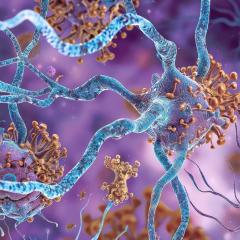
Professor Perry Bartlett’s laboratory is focused on understanding the mechanisms that regulate the production and function of new neurons, generated from the resident population of stem/precursor cells in a region of the adult brain known as the hippocampus.
This process, called neurogenesis, declines with age, and this loss of new neurons has been associated with impairments in cognitive function as well as mood. The group has discovered that the majority of these stem cells are quiescent, but that they can be activated by stimuli as diverse as physical exercise, antidepressants, and learning.
The Bartlett group is now focussed on identifying the molecular mechanisms that regulate stem cell activation, and on using this knowledge to enhance neurogenesis and ameliorate functional deficits in mouse models of ageing dementia, stroke, anxiety and depression.
In a study that was featured on the front cover of the Journal of Neuroscience (Jhaveri et al.), the Bartlett laboratory reported development of a new cell-sorting method to purify, for the first time, hippocampal stem precursor cells to near homogeneity. The study examined the responsiveness of individual precursors to various stimuli and provided the first evidence for the presence of two distinct subpopulations of quiescent precursors in the hippocampus. The study further showed that these distinct precursors are located in different regions of the hippocampus and generate neuronal progeny that are molecularly different. Since it has been shown that neurons regulating spatial learning and those regulating anxiety and mood are located in different areas of the hippocampus, it suggests that it is the preferential activation of one of the two distinct precursor populations that may underpin the different functions of the hippocampus.
Group leader

Emeritus Professor Perry Bartlett
Group Leader, Neurogenic regulation of cognition
+61 7 3346 6311
p.bartlett@uq.edu.au
UQ Researcher Profile
A phase 1b clinical trial of ephrin receptor A4-Fc fusion protein on motor neuron disease
(2021–2023) Cure for MND Foundation - Drug Development Grants
A novel ephrin receptor A4-Fc fusion protein for the treatment of motor neuron disease
(2018–2021) Cure for MND Foundation - Translational Research Grants
(2018) UQ Major Equipment and Infrastructure
Epigenetic signatures of abnormal adult neurogenesis in Rett syndrome
(2017–2019) NHMRC Project Grant
Exercise reverses cognitive decline in aged animals by growth hormone stimulation of neurogenesis in the hippocampus
(2017–2019) NHMRC Project Grant
Stafford Fox Program in prevention of ageing and dementia
(2016–2019) The Stafford Fox Medical Research Foundation
Light-sheet microscope for high-speed 3D imaging of live organisms and fixed tissue
(2016) NHMRC Equipment Grant
Single Cell Transcriptomic Laboratory
(2016) UQ Major Equipment and Infrastructure
Leiter, Odette, Zhuo, Zhan, Rust, Ruslan, Wasielewska, Joanna M., Grönnert, Lisa, Kowal, Susann, Overall, Rupert W., Adusumilli, Vijay S., Blackmore, Daniel G., Southon, Adam, Ganio, Katherine, McDevitt, Christopher A., Rund, Nicole, Brici, David, Aththanayake Mudiyan, Imesh , Sykes, Alexander M., Rünker, Annette E., Zocher, Sara, Ayton, Scott, Bush, Ashley I., Bartlett, Perry F., Hou, Sheng-Tao, Kempermann, Gerd and Walker, Tara L. (2022). Selenium mediates exercise-induced adult neurogenesis and reverses learning deficits induced by hippocampal injury and aging. Cell Metabolism, 34 (3), 408-423.e8. doi: 10.1016/j.cmet.2022.01.005
Zhou, Xiaoqing Alice, Blackmore, Daniel G., Zhuo, Junjie, Nasrallah, Fatima A., To, XuanVinh, Kurniawan, Nyoman D., Carlisle, Alison, Vien, King-Year, Chuang, Kai-Hsiang, Jiang, Tianzi and Bartlett, Perry F. (2021). Neurogenic-dependent changes in hippocampal circuitry underlie the pro-cognitive effect of exercise in ageing mice. iScience, 24 (12) 103450, 103450. doi: 10.1016/j.isci.2021.103450
Blackmore, Daniel G., Steyn, Frederik J., Carlisle, Alison, O’Keeffe, Imogen, Vien, King-Year, Zhou, Xiaoqing, Leiter, Odette, Jhaveri, Dhanisha, Vukovic, Jana, Waters, Michael J. and Bartlett, Perry F. (2021). An exercise ‘sweet spot’ reverses cognitive deficits of ageing by growth hormone-induced neurogenesis. iScience, 24 (11) 103275, 1-25. doi: 10.1016/j.isci.2021.103275
Role of EphA4 in mediating motor neuron death in MND
Zhao, Jing, Stevens, Claire H., Boyd, Andrew W., Ooi, Lezanne and Bartlett, Perry F. (2021). Role of EphA4 in mediating motor neuron death in MND. International Journal of Molecular Sciences, 22 (17) 9430, 9430. doi: 10.3390/ijms22179430
Blackmore, Daniel G., Turpin, Fabrice, Palliyaguru, Tishila, Evans, Harrison T., Chicoteau, Antony, Lee, Wendy, Pelekanos, Matthew, Nguyen, Nghia, Song, Jae, Sullivan, Robert K. P., Sah, Pankaj, Bartlett, Perry F. and Götz, Jürgen (2021). Low-intensity ultrasound restores long-term potentiation and memory in senescent mice through pleiotropic mechanisms including NMDAR signaling. Molecular Psychiatry, 26 (11), 6975-6991. doi: 10.1038/s41380-021-01129-7
Harley, Samuel B. R., Willis, Emily F., Shaikh, Samreen N., Blackmore, Daniel G., Sah, Pankaj, Ruitenberg, Marc J., Bartlett, Perry F. and Vukovic, Jana (2021). Selective ablation of BDNF from microglia reveals novel roles in self-renewal and hippocampal neurogenesis. The Journal of Neuroscience, 41 (19), 4172-4186. doi: 10.1523/jneurosci.2539-20.2021
New trajectory of clinical and biomarker changes in sporadic Alzheimer’s disease
Zhuo, Junjie, Zhang, Yuanchao, Liu, Yong, Liu, Bing, Zhou, Xiaoqing, Bartlett, Perry F., Jiang, Tianzi and Alzheimer’s Disease Neuroimaging Initiative (2021). New trajectory of clinical and biomarker changes in sporadic Alzheimer’s disease. Cerebral Cortex, 31 (7), 3363-3373. doi: 10.1093/cercor/bhab017
Exercise reverses learning deficits induced by hippocampal injury by promoting neurogenesis
Codd, Lavinia N., Blackmore, Daniel G., Vukovic, Jana and Bartlett, Perry F. (2020). Exercise reverses learning deficits induced by hippocampal injury by promoting neurogenesis. Scientific Reports, 10 (1) 19269, 19269. doi: 10.1038/s41598-020-76176-1
Shi, Xiu-Yu, Wang, Geng, Li, Ting, Li, Zhixiu, Leo, Paul, Liu, Zhisheng, Wu, Gefei, Zhu, Hongmin, Zhang, Yuqin, Li, Dong, Gao, Li, Yang, Liu, Wang, Wei, Liao, Jianxiang, Wang, Jiwen, Zhou, Shuizhen, Wang, Hua, Li, Xiaojing, Gao, Jingyun, Zhang, Li, Shu, Xiaomei, Li, Dan, Li, Yan, Chen, Chunhong, Zhang, Xiuju, Partida, Gabriel Cuellar, Lundberg, Mischa, Reutens, David, Bartlett, Perry ... Xu, Huji (2020). Identification of susceptibility variants to benign childhood epilepsy with centro-temporal spikes (BECTS) in Chinese Han population. EBioMedicine, 57 102840, 102840. doi: 10.1016/j.ebiom.2020.102840
Repopulating Microglia Promote Brain Repair in an IL-6-Dependent Manner
Willis, Emily F., MacDonald, Kelli P. A., Nguyen, Quan H., Garrido, Adahir Labrador, Gillespie, Ellen R., Harley, Samuel B. R., Bartlett, Perry F., Schroder, Wayne A., Yates, Abi G., Anthony, Daniel C., Rose-John, Stefan, Ruitenberg, Marc J. and Vukovic, Jana (2020). Repopulating Microglia Promote Brain Repair in an IL-6-Dependent Manner. Cell, 180 (5), 833-846.e16. doi: 10.1016/j.cell.2020.02.013
Groves, Natalie, O’Keeffe, Imogen, Lee, Wendy, Toft, Alexandra, Blackmore, Daniel, Bandhavkar, Saurabh, Coulson, Elizabeth J., Bartlett, Perry F. and Jhaveri, Dhanisha J. (2020). Blockade of TrkB but not p75 NTR activates a subpopulation of quiescent neural precursor cells and enhances neurogenesis in the adult mouse hippocampus. Developmental Neurobiology, 79 (9-10) dneu.22729, 868-879. doi: 10.1002/dneu.22729
Zhao, Jing, Taylor, Chanel J, Newcombe, Estella A, Spanevello, Mark D, O’Keeffe, Imogen, Cooper, Leanne T, Jhaveri, Dhanisha J, Boyd, Andrew W and Bartlett, Perry F (2018). EphA4 regulates hippocampal neural precursor proliferation in the adult mouse brain by d-Serine modulation of N-methyl-d-aspartate receptor signaling. Cerebral Cortex, 29 (10), 4381-4397. doi: 10.1093/cercor/bhy319
Zhao, J., Cooper, L. T., Boyd, A. W. and Bartlett, P. F. (2018). Decreased signalling of EphA4 improves functional performance and motor neuron survival in the SOD1G93A ALS mouse model. Scientific Reports, 8 (1) 11393, 11393. doi: 10.1038/s41598-018-29845-1
Blackmore, Daniel G., Turpin, Fabrice, Mohamed, Abdalla Z., Zong, Fangrong, Pandit, Rucha, Pelekanos, Matthew, Nasrallah, Fatima, Sah, Pankaj, Bartlett, Perry F. and Gotz, Juergen (2018). Multimodal analysis of aged wild-type mice exposed to repeated scanning ultrasound treatments demonstrates long-term safety. Theranostics, 8 (22), 6233-6247. doi: 10.7150/thno.27941
Insulin-like Growth Factor 1 (IGF-1) as a marker of cognitive decline in normal ageing: A review
Frater, Julanne, Lie, David, Bartlett, Perry and McGrath, John J. (2017). Insulin-like Growth Factor 1 (IGF-1) as a marker of cognitive decline in normal ageing: A review. Ageing Research Reviews, 42, 14-27. doi: 10.1016/j.arr.2017.12.002
Cleland, J. P., Willis, E. F., Bartlett, P. F. and Vukovic, J. (2017). Somatic Arc protein expression in hippocampal granule cells is increased in response to environmental change but independent of task-specific learning. Scientific Reports, 7 (1) 12477, 12477. doi: 10.1038/s41598-017-12583-1
Whole-exome sequencing in amyotrophic lateral sclerosis suggests NEK1 is a risk gene in Chinese
Gratten, Jacob, Zhao, Qiongyi, Benyamin, Beben, Garton, Fleur, He, Ji, Leo, Paul J., Mangelsdorf, Marie, Anderson, Lisa, Zhang, Zong-Hong, Chen, Lu, Chen, Xiang-Ding, Cremin, Katie, Deng, Hong-Weng, Edson, Janette, Han, Ying-Ying, Harris, Jessica, Henders, Anjali K., Jin, Zi-Bing, Li, Zhongshan, Lin, Yong, Liu, Xiaolu, Marshall, Mhairi, Mowry, Bryan J., Ran, Shu, Reutens, David C., Song, Sharon, Tan, Li-Jun, Tang, Lu, Wallace, Robyn H. ... Fan, Dongsheng (2017). Whole-exome sequencing in amyotrophic lateral sclerosis suggests NEK1 is a risk gene in Chinese. Genome Medicine, 9 (97) 97, 97. doi: 10.1186/s13073-017-0487-0
Protocol for Short- and Longer-term Spatial Learning and Memory in Mice
Willis, Emily F., Bartlett, Perry F. and Vukovic, Jana (2017). Protocol for Short- and Longer-term Spatial Learning and Memory in Mice. Frontiers in Behavioral Neuroscience, 11 197, 1-8. doi: 10.3389/fnbeh.2017.00197
Benyamin, Beben, He, Ji, Zhao, Qiongyi, Gratten, Jacob, Garton, Fleur, Leo, Paul J., Liu, Zhijun, Mangelsdorf, Marie, Al-Chalabi, Ammar, Anderson, Lisa, Butler, Timothy J., Chen, Lu, Chen, Xiang-Ding, Cremin, Katie, Deng, Hong-Weng, Devine, Matthew, Edson, Janette, Fifita, Jennifer A., Furlong, Sarah, Han, Ying-Ying, Harris, Jessica, Henders, Anjali K., Jeffree, Rosalind L., Jin, Zi-Bing, Li, Zhongshan, Li, Ting, Li, Mengmeng, Lin, Yong, Liu, Xiaolu ... Fan, Dongsheng (2017). Cross-ethnic meta-analysis identifies association of the GPX3-TNIP1 locus with amyotrophic lateral sclerosis. Nature Communications, 8 (1) 611, 611. doi: 10.1038/s41467-017-00471-1
Pegg, Cassandra L., Cooper, Leanne T., Zhao, Jing, Gerometta, Michael, Smith, Fiona M., Yeh, Michael, Bartlett, Perry F., Gorman, Jeffrey J. and Boyd, Andrew W. (2017). Glycoengineering of EphA4 Fc leads to a unique, long-acting and broad spectrum, Eph receptor therapeutic antagonist. Scientific Reports, 7 (1) 6519, 6519. doi: 10.1038/s41598-017-06685-z
Evidence for newly generated interneurons in the basolateral amygdala of adult mice
Jhaveri, D. J., Tedoldi, A., Hunt, S., Sullivan, R., Watts, N. R., Power, J. M., Bartlett, P. F. and Sah, P. (2017). Evidence for newly generated interneurons in the basolateral amygdala of adult mice. Molecular Psychiatry, 23 (3), 521-532. doi: 10.1038/mp.2017.134
Coulson, Elizabeth J. and Bartlett, Perry F. (2017). An exercise path to preventing Alzheimer's disease : An Editorial Highlight on 'Exercise and BDNF reduce Ab production by enhancing alpha-secretase processing of APP'. Journal of Neurochemistry, 142 (2), 191-193. doi: 10.1111/jnc.14038
Ruitenberg, Marc J., Wells, Julia, Bartlett, Perry F., Harvey, Alan R. and Vukovic, Jana (2017). Enrichment increases hippocampal neurogenesis independent of blood monocyte-derived microglia presence following high-dose total body irradiation. Brain Research Bulletin, 132, 150-159. doi: 10.1016/j.brainresbull.2017.05.013
The identification of a novel isoform of EphA4 and ITS expression in SOD1G93A mice
Zhao, Jing, Boyd, Andrew W. and Bartlett, Perry F. (2017) The identification of a novel isoform of EphA4 and ITS expression in SOD1G93A mice. Neuroscience, 347 11-21. doi:10.1016/j.neuroscience.2017.01.038
Australian brain alliance
Michie, Patricia T., Badcock, David R., Bartlett, Perry F., Bekkers, John M., Bourne, James A., Castles, Anne, Egan, Gary F., Fornito, Alex, Hannan, Anthony J., Hickie, Ian B., Mattingley, Jason B., Richards, Linda J., Schofield, Peter R., Shum, David H.K., Stuart, Greg J., Vickers, James C. and Vissel, Bryce (2016) Australian brain alliance. Neuron,92 3: 597-600. doi:10.1016/j.neuron.2016.10.038
Rejuvenating the brain: Aging with cognitive sparkle
Bartlett, Perry F. (2016) Rejuvenating the brain: Aging with cognitive sparkle. AQ – Australian Quarterly, 87 4: 24-29.
Elimination of the geomagnetic field stimulates the proliferation of mouse neural progenitor and stem cells
Fu, Jing-Peng, Mo, Wei-Chuan, Liu, Ying, Bartlett, Perry F. and He, Rong-Qiao (2016) Elimination of the geomagnetic field stimulates the proliferation of mouse neural progenitor and stem cells. Protein & Cell, 7 9: 624-637. doi:10.1007/s13238-016-0300-7
IVIg attenuates complement and improves spinal cord injury outcomes in mice
Brennan, Faith H., Kurniawan, Nyoman D., Vukovic, Jana, Bartlett, Perry F., Käsermann, Fabian, Arumugam, Thiruman V., Basta, Milan and Ruitenberg, Marc J. (2016) IVIg attenuates complement and improves spinal cord injury outcomes in mice. Annals of Clinical and Translational Neurology, 3 7: 495-511. doi:10.1002/acn3.318
Shielding of the geomagnetic field alters actin assembly and inhibits cell motility in human neuroblastoma cells
Mo, Wei-Chuan, Zhang, Zi-Jian, Wang, Dong-Liang, Liu, Ying, Bartlett, Perry F. and He, Rong-Qiao (2016) Shielding of the geomagnetic field alters actin assembly and inhibits cell motility in human neuroblastoma cells. Scientific Reports, 6 . doi:10.1038/srep22624
C9orf72 hexanucleotide repeat expansions in Chinese sporadic amyotrophic lateral sclerosis
He, Ji, Tang, Lu, Benyamin, Beben, Shah, Sonia, Hemani, Gib, Liu, Rong, Ye, Shan, Liu, Xiaolu, Ma, Yan, Zhang, Huagang, Cremin, Katie, Leo, Paul, Wray, Naomi R., Visscher, Peter M., Xu, Huji, Brown, Matthew A., Bartlett, Perry F., Mangelsdorf, Marie and Fan, Dongsheng (2015) C9orf72 hexanucleotide repeat expansions in Chinese sporadic amyotrophic lateral sclerosis. Neurobiology of Aging, 36 9: 2660.e1-2660.e8. doi:10.1016/j.neurobiolaging.2015.06.002
Purification of neural precursor cells reveals the presence of distinct, stimulus-specific subpopulations of quiescent precursors in the adult mouse hippocampus
Jhaveri, Dhanisha J., O'Keeffe, Imogen, Robinson, Gregory J., Zhao, Qiong-Yi, Zhang, Zong Hong, Nink, Virginia, Narayanan, Ramesh K., Osborne, Geoffrey W., Wray, Naomi R. and Bartlett, Perry F. (2015) Purification of neural precursor cells reveals the presence of distinct, stimulus-specific subpopulations of quiescent precursors in the adult mouse hippocampus. Journal of Neuroscience, 35 21: 8132-8144. doi:10.1523/JNEUROSCI.0504-15.2015
Amyotrophic lateral sclerosis genetic studies: from genome-wide association mapping to genome sequencing
He, Ji, Mangelsdorf, Marie, Fan, Dongsheng, Bartlett, Perry and Brown, Matthew A. (2014) Amyotrophic lateral sclerosis genetic studies: from genome-wide association mapping to genome sequencing. The Neuroscientist, 1-17. doi:10.1177/1073858414555404
A comparative study of techniques for differential expression analysis on RNA-seq data
Zhang, Zong Hong, Jhaveri, Dhanisha J., Marshall, Vikki M., Bauer, Denis C., Edson, Janette, Narayanan, Ramesh K., Robinson, Gregory J., Lundberg, Andreas E., Bartlett, Perry F., Wray, Naomi R. and Zhao, Qiong-Yi (2014) A comparative study of techniques for differential expression analysis on RNA-seq data. PLoS One, 9 8: 1-11. doi:10.1371/journal.pone.0103207
Opposing effects of α2- and β-adrenergic receptor stimulation on quiescent neural precursor cell activity and adult hippocampal neurogenesis
Jhaveri, Dhanisha J., Nanavaty, Ishira, Prosper, Boris W., Marathe, Swanand, Husain, Basma F. A., Kernie, Steven G., Bartlett, Perry F. and Vaidya, Vidita A. (2014) Opposing effects of α2- and β-adrenergic receptor stimulation on quiescent neural precursor cell activity and adult hippocampal neurogenesis. PLoS One, 9 6: e98736.1-e98736.11. doi:10.1371/journal.pone.0098736
Introduction to the thematic issue "From brain function to therapy"
Bartlett, Perry F. and He RongQiao (2014) Introduction to the thematic issue "From brain function to therapy".Science China Life Sciences, 57 4: 363-365. doi:10.1007/s11427-014-4645-y
The role of the N-methyl-D-aspartate receptor in the proliferation of adult hippocampal neural stem and precursor cells
Taylor, Chanel J., He RongQiao and Bartlett, Perry F. (2014) The role of the N-methyl-D-aspartate receptor in the proliferation of adult hippocampal neural stem and precursor cells. Science China-Life Sciences, 57 4: 403-411. doi:10.1007/s11427-014-4637-y
Transcriptome profile of human neuroblastoma cells in the hypomagnetic field
Mo, WeiChuan, Ying, Liu, Bartlett, Perry F. and He, RongQiao (2014) Transcriptome profile of human neuroblastoma cells in the hypomagnetic field. Science China Life Sciences, 57 4: 448-461. doi:10.1007/s11427-014-4644-z
Visualizing the microtubule-associated protein tau in the nucleus
Lu, Jing, Li, Ting, He, RongQiao, Bartlett, Perry F. and Gotz, Jürgen (2014) Visualizing the microtubule-associated protein tau in the nucleus. Science China Life Sciences, 57 4: 422-431. doi:10.1007/s11427-014-4635-0
Blockade of microglial KATP-channel abrogates suppression of inflammatory-mediated inhibition of neural precursor cells
Ortega, Francisco J., Vukovic, Jana, Rodriguez, Manuel J. and Bartlett, Perry F. (2014) Blockade of microglial KATP-channel abrogates suppression of inflammatory-mediated inhibition of neural precursor cells. GLIA, 62 2: 247-258. doi:10.1002/glia.22603
Therapeutic targeting of EPH receptors and their ligands
Boyd, Andrew W. , Bartlett, Perry F. and Lackmann, Martin (2014) Therapeutic targeting of EPH receptors and their ligands. Nature Reviews Drug Discovery, 13 1: 39-62. doi:10.1038/nrd4175
X-linked microtubule-associated protein, Mid1, regulates axon development
Lu, Tingjia, Chen, Renchao, Cox, Timothy C., Moldrich, Randal X., Kurniawan, Nyoman, Tan, Guohe, Perry, Jo K., Ashworth, Alan, Bartlett, Perry F., Xu, Li, Zhang, Jing, Lu, Bin, Wu, Mingyue, Shen, Qi, Liu, Yuanyuan, Richards, Linda J. and Xiong, Zhiqi (2013) X-linked microtubule-associated protein, Mid1, regulates axon development.Proceedings of the National Academy of Sciences of the United States of America, 110 47: 19131-19136. doi:10.1073/pnas.1303687110
A novel fluorescent reporter CDy1 enriches for neural stem cells derived from the murine brain
Vukovic, Jana, Bedin, Anne-Sophie, Bartlett, Perry F. and Osborne, Geoffrey W. (2013) A novel fluorescent reporter CDy1 enriches for neural stem cells derived from the murine brain. Stem Cells and Development, 22 16: 2341-2345. doi:10.1089/scd.2012.0660
Saharan, Sumiti, Jhaveri, Dhanisha J. and Bartlett, Perry F. (2013) SIRT1 regulates the neurogenic potential of neural precursors in the adult subventricular zone and hippocampus. Journal of Neuroscience Research, 91 5: 642-659. doi:10.1002/jnr.23199
Vukovic, Jana, Borlikova, Gilyana G., Ruitenberg, Marc J., Robinson, Gregory J., Sullivan, Robert K. P., Walker, Tara L. and Bartlett, Perry F. (2013) Immature doublecortin-positive hippocampal neurons are important for learning but not for remembering. Journal of Neuroscience, 33 15: 6603-6613. doi:10.1523/JNEUROSCI.3064-12.2013
Acute delivery of EphA4-Fc improves functional recovery after contusive spinal cord injury in rats
Spanevello, Mark Damien, Tajouri, Sophie Ines, Mirciov, Cornel, Kurniawan, Nyoman, Pearse, Martin John, Fabri, Louis Jerry, Owczarek, Catherine Mary, Hardy, Matthew Philip, Bradford, Rebecca Anne, Ramunno, Melanie Louise, Turnley, Ann Maree, Ruitenberg, Marc Jan, Boyd, Andrew Wallace and Bartlett, Perry Francis (2013) Acute delivery of EphA4-Fc improves functional recovery after contusive spinal cord injury in rats. Journal of Neurotrauma, 30 12: 1023-1034. doi:10.1089/neu.2012.2729
Glioma surgical aspirate: a viable source of tumor tissue for experimental research
Day, Bryan W., Stringer, Brett W., Wilson, John, Jeffree, Rosalind L., Jamieson, Paul R., Ensbey, Kathleen S., Bruce, Zara C., Inglis, Po, Allan, Suzanne, Winter, Craig, Tollesson, Gert, Campbell, Scott, Lucas, Peter, Findlay, Wendy, Kadrian, David, Johnson, David, Robertson, Thomas, Johns, Terrance G., Bartlett, Perry F., Osborne, Geoffrey W. and Boyd, Andrew W. (2013) Glioma surgical aspirate: a viable source of tumor tissue for experimental research.Cancers, 5 2: 357-371. doi:10.3390/cancers5020357
Taylor, Chanel J., Jhaveri, Dhanisha J. and Bartlett, Perry F. (2013) The therapeutic potential of endogenous hippocampal stem cells for the treatment of neurological disorders. Frontiers in Cellular Neuroscience, 7 JANUARY 2013: 5.1-5.7. doi:10.3389/fncel.2013.00005
Mo, Wei-chuan, Zhang, Zi-jian, Liu, Ying, Bartlett, Perry F. and He, Rong-qiao (2013) Magnetic shielding accelerates the proliferation of human neuroblastoma cell by promoting G1-phase progression. PLoS One, 86 1: e54775.1-e54775.11. doi:10.1371/journal.pone.0054775
Chen, Min, Helen Cooper, Zhou, Ji Zhi, Bartlett, Perry F. and Xu, Zhi Ping (2013) Reduction in the size of layered double hydroxide nanoparticles enhances the efficiency of siRNA delivery. Journal of Colloid and Interface Science,390 1: 275-281. doi:10.1016/j.jcis.2012.09.033
GH mediates exercise-dependent activation of SVZ neural precursor cells in aged mice
Blackmore, Daniel G., Vukovic, Jana, Waters, Michael J. and Bartlett, Perry F. (2012) GH mediates exercise-dependent activation of SVZ neural precursor cells in aged mice. PLoS One, 7 11: e49912.1-e49912.7. doi:10.1371/journal.pone.0049912
Prolactin stimulates precursor cells in the adult mouse hippocampus
Walker, Tara L., Vukovic, Jana, Koudijs, Margaretha M., Blackmore, Daniel G., Mackay, Eirinn W., Sykes, Alex M., Overall, Rupert W., Hamlin, Adam S. and Bartlett, Perry F. (2012) Prolactin stimulates precursor cells in the adult mouse hippocampus. PLoS One, 7 9 Article No. e44371: . doi:10.1371/journal.pone.0044371
Properties of doublecortin expressing neurons in the adult mouse dentate gyrus
Spampanato, Jay, Sullivan, Robert K., Turpin, Fabrice R., Bartlett, Perry F. and Sah, Pankaj (2012) Properties of doublecortin expressing neurons in the adult mouse dentate gyrus. PLoS One, 7 9: e41029-1-e41029-12. doi:10.1371/journal.pone.0041029
Segmentation of the C57BL/6J mouse cerebellum in magnetic resonance images
Ullmann, Jeremy F. P., Keller, Marianne D., Watson, Charles, Janke, Andrew L., Kurniawan, Nyoman D., Yang, Zhengyi, Richards, Kay, Paxinos, George, Egan, Gary F., Petrou, Steven, Bartlett, Perry, Galloway, Graham J. and Reutens, David C. (2012) Segmentation of the C57BL/6J mouse cerebellum in magnetic resonance images.NeuroImage, 62 3: 1408-1414. doi:10.1016/j.neuroimage.2012.05.061
Dixon, Kirsty J., Munro, Kathryn M., Bartlett, Perry F. and Turnley, Ann M. (2012) Partial change in EphA4 knockout mouse phenotype: Loss of diminished GFAP upregulation following spinal cord injury. Neuroscience Letters, 525 1: 66-71. doi:10.1016/j.neulet.2012.07.023
Jhaveri, Dhanisha J., Taylor, Chanel J. and Bartlett, Perry F. (2012) Activation of different neural precursor populations in the adult hippocampus: Does this lead to new neurons with discrete functions?. Developmental Neurobiology, 72 7: 1044-1058. doi:10.1002/dneu.22027
Introduction to the special issue on neural stem cells: regulation and function
Bartlett, Perry F. and Berninger, Benedikt (2012) Introduction to the special issue on neural stem cells: regulation and function. Developmental Neurobiology, 72 7: 953-954. doi:10.1002/dneu.22034
Lackovic, Jenny, Howitt, Jason, Callaway, Jennifer K., Silke, John, Bartlett, Perry and Tan, Seong-Seng (2012) Differential regulation of Nedd4 ubiquitin ligases and their adaptor protein Ndfip1 in a rat model of ischemic stroke.Experimental Neurology, 235 1: 326-335. doi:10.1016/j.expneurol.2012.02.014
Microglia modulate hippocampal neural precursor activity in response to exercise and aging
Vukovic, Jana, Colditz, Michael J., Blackmore, Daniel G., Ruitenberg, Marc J. and Bartlett, Perry F. (2012) Microglia modulate hippocampal neural precursor activity in response to exercise and aging. Journal of Neuroscience, 32 19: 6435-6443. doi:10.1523/JNEUROSCI.5925-11.2012
Baizabal, José-Manuel, Cano-Martinez, Agustina, Valencia, Concepción, Santa-Olalla, Jesús, Young, Kaylene Maree, Rietze, Rodney L., Bartlett, Perry F. and Covarrubias, Luis (2012) Glial commitment of mesencephalic neural precursor cells expanded as neurospheres precludes their engagement in niche-dependent dopaminergic neurogenesis. Stem Cells and Development, 21 7: 1047-1058. doi:10.1089/scd.2011.0241
Wong, Yunyi, Cooper, Helen M., Zhang, Kai, Chen, Min, Bartlett, Perry and Xu, Zhi Ping (2012) Efficiency of layered double hydroxide nanoparticle-mediated delivery of siRNA is determined by nucleotide sequence. Journal of Colloid and Interface Science, 369 1: 453-459. doi:10.1016/j.jcis.2011.12.046
Activation of latent precursors in the hippocampus is dependent on long-term potentiation
Kameda M., Taylor C. J., Walker, T. L., Black, D. M., Abraham, W. C. and Bartlett, P. F. (2012) Activation of latent precursors in the hippocampus is dependent on long-term potentiation. Translational Psychiatry, 2 e72.1-e72.9. doi:10.1038/tp.2011.70
Howitt, Jason, Lackovic, Jenny, Low, Ley-Hian, Naguib, Adam, Macintyre, Alison, Goh, Choo-Peng, Callaway, Jennifer K., Hammond, Vicki, Thomas, Tim, Dixon, Matthew, Putz, Ulrich, Silke, John, Bartlett, Perry, Yang, Baoli, Kumar, Sharad, Trotman, Lloyd C. and Tan, Seong-Seng (2012) Ndfip1 regulates nuclear Pten import in vivo to promote neuronal survival following cerebral ischemia. Journal of Cell Biology, 196 1: 29-36. doi:10.1083/jcb.201105009
Segmentation of the mouse hippocampal formation in magnetic resonance images
Richards, Kay, Watson, Charles, Buckley, Rachel F., Kurniawan, Nyoman D., Yang, Zhengyi, Keller, Marianne D., Bearem, Richard, Bartlett, Perry F., Egan, Gary F., Galloway, Graham J., Paxinos, George, Petrou, Steven and Reutens, David C. (2011) Segmentation of the mouse hippocampal formation in magnetic resonance images.NeuroImage, 58 3: 732-740. doi:10.1016/j.neuroimage.2011.06.025
Goldshmit, Yona, Spanevello, Mark D., Tajouri, Sophie, Li, Li, Rogers, Fiona, Pearse, Martin, Galea, Mary, Bartlett, Perry F., Boyd, Andrew W. and Turnley, Ann M. (2011) EphA4 blockers promote axonal regeneration and functional recovery following spinal cord injury in mice. PLoS One, 6 9: e24636-1-e24636-12. doi:10.1371/journal.pone.0024636
Oncostatin M regulates neural precursor activity in the adult brain
Beatus, Paul, Jhaveri, Dhanisha J., Walker, Tara L., Lucas, Peter G., Rietze, Rodney L., Cooper, Helen M., Morikawa, Yoshihiro and Bartlett, Perry F. (2011) Oncostatin M regulates neural precursor activity in the adult brain.Developmental Neurobiology, 71 7: 619-633. doi:10.1002/dneu.20871
Activation of neural precursors in the adult neurogenic niches
Vukovic, Jana, Blackmore, Daniel, Jhaveri, Dhanisha and Bartlett, Perry F. (2011) Activation of neural precursors in the adult neurogenic niches. Neurochemistry International, 59 3: 341-346. doi:10.1016/j.neuint.2011.04.003
Walker, Tara L., Turnbull, Geoff W., Mackay, Eirinn W., Hannan, Anthony J. and Bartlett, Perry F. (2011) The latent stem cell population is retained in the hippocampus of transgenic Huntington's disease mice but not wild-type mice.PLoS One, 6 3: e18153-1-e18153-7. doi:10.1371/journal.pone.0018153
Dave, Richa K., Ellis, Tammy, Toumpas, Melissa C., Robson, Jonathan P., Julian, Elaine, Adolphe, Christelle, Bartlett, Perry F., Cooper, Helen M., Reynolds, Brent A. and Wainwright, Brandon J. (2011) Sonic hedgehog and notch signaling can cooperate to regulate neurogenic divisions of neocortical progenitors. PLoS One, 6 2: e14680-1-e14680-13. doi:10.1371/journal.pone.0014680
Efficient delivery of siRNA to cortical neurons using layered double hydroxide nanoparticles
Wong, Yunyi, Markham, Kathryn, Xu, Zhi Ping, Chen, Min, Liu, Gao Qing (Max), Bartlett, Perry F. and Cooper, Helen M. (2010) Efficient delivery of siRNA to cortical neurons using layered double hydroxide nanoparticles. Biomaterials,31 33: 8770-8779. doi:10.1016/j.biomaterials.2010.07.077
Endogenous interferon gamma directly regulates neural precursors in the non-inflammatory brain
Li, Li, Walker, Tara L., Zhang, Ying, Mackay, Eirinn W. and Bartlett, Perry F. (2010) Endogenous interferon gamma directly regulates neural precursors in the non-inflammatory brain. Journal of Neuroscience, 30 27: 9038-9050. doi:10.1523/JNEUROSCI.5691-09.2010
Norepinephrine directly activates adult hippocampal precursors via beta(3)-adrenergic receptors
Jhaveri, Dhanisha J., Mackay, Eirinn W., Hamlin, Adam S., Marathe, Swananda V., Nandam, L. Sanjay, Vaidya, Vidita A. and Bartlett, Perry F. (2010) Norepinephrine directly activates adult hippocampal precursors via beta(3)-adrenergic receptors. Journal of Neuroscience, 30 7: 2795-2806. doi:10.1523/JNEUROSCI.3780-09.2010
Yanpallewar, Sudhirkumar U., Fernandes, Kimberly, Marathe, Swananda V., Vadodaria, Krishna C., Jhaveri, Dhanisha, Rommelfanger, Karen, Ladiwala, Uma, Jha, Shanker, Muthig, Verena, Hein, Lutz, Bartlett, Perry, Weinshenker, David and Vaidya, Vidita A. (2010) α2-adrenoceptor blockade accelerates the neurogenic, neurotrophic, and behavioral effects of chronic antidepressant treatment. Journal of Neuroscience, 30 3: 1096-1109. doi:10.1523/JNEUROSCI.2309-09.2010
p75 neurotrophin receptor regulates basal and fluoxetine-stimulated hippocampal neurogenesis
Colditz, Michael J., Catts, Vibeke S., Al-menhali, Noura, Osborne, Geoffrey W., Bartlett, Perry F. and Coulson, Elizabeth J. (2009) p75 neurotrophin receptor regulates basal and fluoxetine-stimulated hippocampal neurogenesis.Experimental Brain Research, 200 2: 161-167. doi:10.1007/s00221-009-1947-6
Scare-mongering and the anticipatory ethics of experimental technologies
Carter, Adrian, Bartlett, Perry F. and Hall, Wayne (2009) Scare-mongering and the anticipatory ethics of experimental technologies. The American Journal of Bioethics, 9 5: 47-48. doi:10.1080/15265160902788736
Subcellular compartment targeting of layered double hydroxide nanoparticles
Xu, Zhi Ping, Niebert, Marcus, Porazik, Katharina, Walker, Tara L., Cooper, Helen M., Middelberg, Anton P.J., Gray, Peter P., Bartlett, Perry F. and Lu, Gao Qing (Max) (2008) Subcellular compartment targeting of layered double hydroxide nanoparticles. Journal of Controlled Release, 130 1: 86-94. doi:10.1016/j.jconrel.2008.05.021
Latent stem and progenitor cells in the hippocampus are activated by neural excitation
Walker, Tara L., White, Amanda, Black, Debra M., Wallace, Robyn H., Sah, Pankaj and Bartlett, Perry F. (2008) Latent stem and progenitor cells in the hippocampus are activated by neural excitation. Journal of Neuroscience, 28 20: 5240-5247. doi:10.1523/JNEUROSCI.0344-08.2008
Yasuda, Takahiro, Bartlett, Perry F. and Adams, David J. (2008) K(ir) and K(v) channels regulate electrical properties and proliferation of adult neural precursor cells. Molecular And Cellular Neuroscience, 37 2: 284-297. doi:10.1016/j.mcn.2007.10.003
Underwood, Clare K., Reid, Kate, May, Linda M., Bartlett, Perry F. and Coulson, Elizabeth J. (2008) Palmitoylation of the C-terminal fragment of p75NTR regulates death signaling and is required for subsequent cleavage by gamma-secretase. Molecular and Cellular Neuroscience, 37 2: 346-358. doi:10.1016/j.mcn.2007.10.005
Coulson, E. J., May, L. M., Osborne, S. L., Reid, K., Underwood, C. K., Meunier, F. A., Bartlett, P. F. and Sah, P. (2008) p75 neurotrophin receptor mediates neuronal cell death by activating GIRK channels through phosphatidylinositol 4,5-bisphosphate. Journal of Neuroscience, 28 1: 315-324. doi:10.1523/JNEUROSCI.2699-07.2008
Stafford, Mark R., Bartlett, Perry F. and Adams, David J. (2007) Purinergic receptor activation inhibits mitogen-stimulated proliferation in primary neurospheres from the adult mouse subventricular zone. Molecular and Cellular Neuroscience, 35 4: 535-548. doi:10.1016/j.mcn.2007.04.013
Coultas, Leigh, Terzano, Susanna, Thomas, Tim, Voss, Anne, Reid, Kate, Stanley, Edouard G., Scott, Clare L., Bouillet, Philippe, Bartlett, Perry, Ham, Jonathan, Adams, Jerry M. and Strasser, Andreas (2007) Hrk/DP5 contributes to the apoptosis of select neuronal populations but is dispensable for haematopoietic cell apoptosis. Journal of Cell Science, 120 12: 2044-2052. doi:10.1242/jcs.002063
Zinc-mediated neuronal death is dependent on Trk activation
Morley, Samuel N., Power, John M., Coulson, Elizabeth J. and Bartlett, Perry F. (2007) Zinc-mediated neuronal death is dependent on Trk activation. Experimental Neurology, 205 2: 360-366. doi:10.1016/j.expneurol.2007.02.006
5-HT7, neurogenesis and antidepressants: A promising therapeutic axis for treating depression
Nandam, L. Sanjay, Jhaveri, Dhanisha and Bartlett, Perry (2007) 5-HT7, neurogenesis and antidepressants: A promising therapeutic axis for treating depression. Clinical and Experimental Pharmacology and Physiology, 34 5-6: 546-551. doi:10.1111/j.1440-1681.2007.04608.x
Walker, T. L., Yasuda, T., Adams, D. J. and Bartlett, P. F. (2007) The doublecortin-expressing population in the developing and adult brain contains multipotential precursors in addition to neuronal-lineage cells. Journal of Neuroscience, 27 14: 3734-3742. doi:10.1523/JNEUROSCI.5060-06.2007
Xu, Zhi Ping, Kurniawan, Nyoman D., Bartlett, Perry F. and Lu, Gao Qing (2007) Enhancement of relaxivity rates of Gd-DTPA complexes by intercalation into layered double hydroxide nanoparticles. Chemistry: A European Journal, 13 10: 2824-2830. doi:10.1002/chem.200600571
Steeves, J. D., Lammertse, D., Curt, A., Fawcett, J. W., Tuszynski, M. H., Ditunno, J. F., Ellaway, P. H., Fehlings, M. G., Guest, J. D., Kleitman, N., Bartlett, P. F., Blight, A. R., Dietz, V., Dobkin, B. H., Grossman, R., Short, D., Nakamura, M., Coleman, W. P., Gaviria, M. and Privat, A. (2007) Guidelines for the conduct of clinical trials for spinal cord injury (SCI) as developed by the ICCP panel: clinical trial outcome measures. Spinal Cord, 45 3: 206-221. doi:10.1038/sj.sc.3102008
EphA4 receptor tyrosine kinase and regulation of astrocytic gliosis
Goldshmit, V, Puschmann, V, Galea, MP, Bartlett, PF and Turnley, AM (2007) EphA4 receptor tyrosine kinase and regulation of astrocytic gliosis. Journal of Neurochemistry, 102 161-162.
Tuszynski, M. H., Steeves, J. D., Fawcett, J. W., Lammertse, D., Kalichman, M., Rask, C., Curt, A., Ditunno, J. F., Fehlings, M. G., Guest, J. D., Ellaway, P. H., Kleitman, N., Bartlett, P. F., Blight, A. R., Dietz, V., Dobkin, B. H., Grossman, R. and Privat, A. (2007) Guidelines for the conduct of clinical trials for spinal cord injury as developed by the ICCP Panel: clinical trial inclusion/exclusion criteria and ethics. Spinal Cord, 45 3: 222-231. doi:10.1038/sj.sc.3102009
Fawcett, J. W., Curt, A., Steeves, J. D., Coleman, W. P., Tuszynski, M. H., Lammertse, D., Bartlett, P. F., Blight, A. R., Dietz, V., Ditunno, J., Dobkin, B. H., Havton, L. A., Ellaway, P. H., Fehlings, M. G., Privat, A., Grossman, R., Guest, J. D., Kleitman, N., Nakamura, M., Gaviria, M. and Short, D. (2007) Guidelines for the conduct of clinical trials for spinal cord injury as developed by the ICCP panel: spontaneous recovery after spinal cord injury and statistical power needed for therapeutic clinical trials. Spinal Cord, 45 3: 190-205. doi:10.1038/sj.sc.3102007
Layered double hydroxide nanoparticles as cellular delivery vectors of supercoiled plasmid DNA
Xu, Zhi Ping, Walker, Tara L., Liu, Kerh-lin, Cooper, Helen M., Lu, G. Q. Max and Bartlett, Perry F. (2007) Layered double hydroxide nanoparticles as cellular delivery vectors of supercoiled plasmid DNA. International Journal of Nanomedicine, 2 2: 163-174. doi:10.2147/IJN.S
The slice-sphere assay: A combinatorial approach to evaluate neural precursor activity
Jhaveri, DJ, Nandam, LS and Bartlett, PF (2007) The slice-sphere assay: A combinatorial approach to evaluate neural precursor activity. Journal of Neurochemistry, 102 185-185.
Young, K. M., Merson, T. D., Sotthibundhu, A., Coulson, E. J. and Bartlett, P. F. (2007) p75 Neurotrophin receptor expression defines a population of BDNF-responsive neurogenic precursor cells. Journal of Neuroscience, 27 19: 5146-5155. doi:10.1523/JNEUROSCI.0654-07.2007
EphA4 regulates central nervous system vascular formation
Goldshmit, Y., Galea, M. P., Bartlett, P. F. and Turnley, A. M. (2006) EphA4 regulates central nervous system vascular formation. Journal of Comparative Neurology, 497 6: 864-875. doi:10.1002/cne.21029
Young, Kaylene M., Bartlett, Perry F. and Coulson, Elizabeth J. (2006) Neural progenitor number is regulated by nuclear factor-kappa B p65 and p50 subunit-dependent proliferation rather than cell survival. Journal of Neuroscience Research, 83 1: 39-49. doi:10.1002/jnr.20702
Stable suspension of layered double hydroxide nanoparticles in aqueous solution
Xu, Zhi Ping, Stevenson, Gregory S., Lu, Chao-Qing, Lu, Gao Qing (Max), Bartlett, Perry F. and Gray, Peter P. (2006) Stable suspension of layered double hydroxide nanoparticles in aqueous solution. Journal of The American Chemical Society, 128 1: 36-37. doi:10.1021/ja056652a
The transcriptional coactivator Querkopf controls adult neurogenesis
Merson, T. D., Dixon, M. P., Collin, C., Rietze, R. L., Bartlett, P. F., Thomas, T. and Voss, A. K. (2006) The transcriptional coactivator Querkopf controls adult neurogenesis. Journal of Neuroscience, 26 44: 11359-11370. doi:10.1523/JNEUROSCI.2247-06.2006
Cognitive disorders and neurogenesis deficits in Huntington's disease mice are rescued by fluoxetine
Grote, H. E., Bull, N. D., Howard, M. L., Van Dellen, A., Blakemore, C., Bartlett, P. F. and Hannan, A. J. (2005) Cognitive disorders and neurogenesis deficits in Huntington's disease mice are rescued by fluoxetine. European Journal of Neuroscience, 22 8: 2081-2088. doi:10.1111/j.1460-9568.2005.04365.x
The adult mouse hippocampal progenitor is neurogenic but not a stem cell
Bull, N. D. and Bartlett, P. F. (2005) The adult mouse hippocampal progenitor is neurogenic but not a stem cell.Journal of Neuroscience, 25 47: 10815-10821. doi:10.1523/JNEUROSCI.3249-05.2005
Axonal regeneration and lack of astrocytic gliosis in EphA4-deficient mice
Goldshmit, Y., Galea, M. P., Wise, G., Bartlett, P. F. and Turnley, A. M. (2004) Axonal regeneration and lack of astrocytic gliosis in EphA4-deficient mice. Journal of Neuroscience, 24 45: 10064-10073. doi:10.1523/JNEUROSCI.2981-04.2004
Comparative analysis of CNS populations in knockout mice with altered growth hormone responsiveness
Ransome, M. I., Goldshmit, Y., Bartlett, P. F., Waters, M. J. and Turnley, A. M. (2004) Comparative analysis of CNS populations in knockout mice with altered growth hormone responsiveness. European Journal of Neuroscience, 19 8: 2069-2079. doi:10.1111/j.0953-816X.2004.03308.x
Gillespie, LN, Clark, GM, Bartlett, PF and Marzella, PL (2003) BDNF-induced survival of auditory neurons in vivo: Cessation of treatment leads to accelerated loss of survival effects. Journal of Neuroscience Research, 71 6: 785-790. doi:10.1002/jnr.10542
Forger, NG, Prevette, D, deLapeyriere, O, de Bovis, B, Wang, SW, Bartlett, P and Oppenheim, RW (2003) Cardiotrophin-like cytokine/cytokine-like factor 1 is an essential trophic factor for lumbar and facial motoneurons in vivo. Journal of Neuroscience, 23 26: 8854-8858.
Murray, SS, Bartlett, PF, Lopes, EC, Coulson, EJ, Greferath, U and Cheema, SS (2003) Low-affinity neurotrophin receptor with targeted mutation of exon 3 is capable of mediating the death of axotomized neurons. Clinical And Experimental Pharmacology And Physiology, 30 4: 217-222. doi:10.1046/j.1440-1681.2003.03827.x
Role of EphA4 in defining the position of a motoneuron pool within the spinal cord
Coonan, JR, Bartlett, PF and Galea, MP (2003) Role of EphA4 in defining the position of a motoneuron pool within the spinal cord. Journal of Comparative Neurology, 458 1: 98-111. doi:10.1002/cne.10571
N-terminal Slit2 promotes survival and neurite extension in cultured peripheral neurons
Piper, Michael, Nurcombe, Victor, Reid, Kate, Bartlett, Perry and Little, Melissa (2002) N-terminal Slit2 promotes survival and neurite extension in cultured peripheral neurons. Neuroreport, 13 17: 2375-2378. doi:10.1097/01.wnr.0000049602.07559.20
Greferath, U, Mallard, C, Roufail, E, Rees, SM, Barrett, GL and Bartlett, PF (2002) Expression of the p75 neurotrophin receptor by striatal cholinergic neurons following global ischemia in rats is associated with neuronal degeneration.Neuroscience Letters, 332 1: 57-60. doi:10.1016/S0304-3940(02)00928-X
Failure of sensory neurons to express class I MHC is due to differential SOCS1 expression
Turnley, AM, Starr, R and Bartlett, PF (2002) Failure of sensory neurons to express class I MHC is due to differential SOCS1 expression. Journal of Neuroimmunology, 123 1-2: 35-40. doi:10.1016/S0165-5728(01)00480-5
LIF receptor signaling limits immune-mediated demyelination by enhancing oligodendrocyte survival
Butzkueven, H, Zhang, JG, Hanninen, MS, Hochrein, H, Chionh, F, Shipham, KA, Emery, B, Turnley, AM, Petratos, S, Ernst, M, Bartlett, PF and Kilpatrick, TJ (2002) LIF receptor signaling limits immune-mediated demyelination by enhancing oligodendrocyte survival. Nature Medicine, 8 6: 613-619. doi:10.1038/nm06020-613
Culvenor, JG, Rietze, RL, Bartlett, PF, Masters, CL and Li, QX (2002) Oligodendrocytes from neural stem cells express alpha-synuclein: increased numbers from presenilin I deficient mice. Neuroreport, 13 10: 1305-1308. doi:10.1097/00001756-200207190-00018
Turnley, A. M., Faux, C. H., Rietze, R. L., Coonan, J. R. and Bartlett, P. F. (2002) Suppressor of cytokine signaling 2 regulates neuronal differentiation by inhibiting growth hormone signaling. Nature Neuroscience, 5 11: 1155-1162. doi:10.1038/nn954
Development and reorganization of corticospinal projections in EphA4 deficient mice
Coonan, J. R., Greferath, U., Messenger, J., Hartley, L., Murphy, M., Boyd, A. W., Dottori, M., Galea, M. P. and Bartlett, P. F. (2001) Development and reorganization of corticospinal projections in EphA4 deficient mice. Journal of Comparative Neurology, 436 2: 248-262. doi:10.1002/cne.1064
Interactions between fibroblast growth factors and Notch regulate neuronal differentiation
Faux, CH, Turnley, AM, Epa, R, Cappai, R and Bartlett, PF (2001) Interactions between fibroblast growth factors and Notch regulate neuronal differentiation. Journal of Neuroscience, 21 15: 5587-5596.
LIF is more potent than BDNF In promoting neurite outgrowth of mammalian auditory neurons in vitro
Gillespie, LN, Clark, GM, Bartlett, PF and Marzella, PL (2001) LIF is more potent than BDNF In promoting neurite outgrowth of mammalian auditory neurons in vitro. Neuroreport, 12 2: 275-279. doi:10.1097/00001756-200102120-00019
Purification of a pluripotent neural stem cell from the adult mouse brain
Rietze, RL, Valcanis, H., Brooker, G. F., Thomas, T., Voss, A. K. and Bartlett, P. F. (2001) Purification of a pluripotent neural stem cell from the adult mouse brain. Nature, 412 6848: 736-739. doi:10.1038/35089085
SOCSI regulates interferon-gamma mediated sensory-neuron survival
Turnley, AM, Starr, R and Bartlett, PF (2001) SOCSI regulates interferon-gamma mediated sensory-neuron survival.Neuroreport, 12 16: 3443-3445. doi:10.1097/00001756-200111160-00013
Lowry, KS, Murray, SS, Coulson, EJ, Epa, R, Bartlett, PF, Barrett, G and Cheema, SS (2001) Systemic administration of antisense p75(NTR) oligodeoxynucleotides rescues axotomised spinal motor neurons. Journal of Neuroscience Research, 64 1: 11-17. doi:10.1002/jnr.1048
Chopper, a new death domain of the p75 neurotrophin receptor that mediates rapid neuronal cell death
Coulson, E. J., Reid, K., Baca, M., Shipham, K. A., Hulett, S. M., Kilpatrick, T. J. and Bartlett, P. F. (2000) Chopper, a new death domain of the p75 neurotrophin receptor that mediates rapid neuronal cell death. Journal of Biological Chemistry, 275 39: 30537-30545. doi:10.1074/jbc.M005214200
Polizzotto, Mark N., Bartlett, Perry F. and Turnley, Ann M. (2000) Expression of "suppressor of cytokine signalling" (SOCS) genes in the developing and adult mouse nervous system. Journal of Comparative Neurology, 423 2: 348-358. doi:10.1002/1096-9861(20000724)423:2<348::AID-CNE11>3.0.CO;2-W
Soilu-Hanninen, Merja, Epa, Ruwan, Shipham, Kylie, Butzkueven, Helmut, Bucci, Tamara, Barrett, Graham, Bartlett, Perry F. and Kilpatrick, Trevor J. (2000) Treatment of experimental autoimmune encephalomyelitis with antisense oligonucleotides against the low affinity neurotrophin receptor. Journal of Neuroscience Research, 59 6: 712-721. doi:10.1002/(SICI)1097-4547(20000315)59:6<712::AID-JNR3>3.0.CO;2-L
Turnley, AM and Bartlett, PF (2000) Cytokines that signal through the leukemia inhibitory factor receptor-beta complex in the nervous system. Journal of Neurochemistry, 74 3: 889-899. doi:10.1046/j.1471-4159.2000.0740889.x
Enlarged cholinergic forebrain neurons and improved spatial learning in p75 knockout mice
Greferath, Ursula, Bennie, Antoinette, Kourakis, Angela, Bartlett, Perry F., Murphy, Mark and Barrett, Graham L. (2000) Enlarged cholinergic forebrain neurons and improved spatial learning in p75 knockout mice. European Journal of Neuroscience, 12 3: 885-893. doi:10.1046/j.1460-9568.2000.00976.x
Endogenous IGF-1 regulates the neuronal differentiation of adult stem cells
Brooker, Gordon J.F., Kalloniatis, Michael, Russo, Vincenzo C., Murphy, Mark, Werther, George A. and Bartlett, Perry F. (2000) Endogenous IGF-1 regulates the neuronal differentiation of adult stem cells. Journal of Neuroscience Research, 59 3: 332-341. doi:10.1002/(SICI)1097-4547(20000201)59:3<332::AID-JNR6>3.0.CO;2-2
Dutton, Renée and Bartlett, Perry F. (2000) Precursor cells in the subventricular zone of the adult mouse are actively inhibited from differentiating into neurons. Developmental Neuroscience, 22 1-2: 96-105. doi:10.1159/000017431
Primary olfactory axons form ectopic glomeruli in mice lacking p75NTR
Tisay, KT, Bartlett, PF and Key, B (2000) Primary olfactory axons form ectopic glomeruli in mice lacking p75NTR.Journal of Comparative Neurology, 428 4: 656-670. doi:10.1002/1096-9861(20001225)428:4<656::AID-CNE6>3.0.CO;2-7
Role of neurotrophin receptor p75NTR in mediating neuronal cell death following injury
Coulson, E. J., Reid, K., Murray, S. S., Cheema, S. S. and Bartlett, P. F. (2000) Role of neurotrophin receptor p75NTR in mediating neuronal cell death following injury. Clinical And Experimental Pharmacology And Physiology, 27 7: 537-541. doi:10.1046/j.1440-1681.2000.03295.x
Marzella, P. L., Gillespie, L. N., Clark, G. M., Bartlett, P. F. and Kilpatrick, T. J. (1999) The neurotrophins act synergistically with LIF and members of the TGF-beta superfamily to promote the survival of spiral ganglia neurons in vitro. Hearing Research, 138 1-2: 73-80. doi:10.1016/S0378-5955(99)00152-5
Dutton, Renée, Yamada, Toshiya, Turnley, Ann, Bartlett, Perry F. and Murphy, Mark (1999) Regulation of spinal motoneuron differentiation by the combined action of sonic hedgehog and and neurotrophin 3. Clinical And Experimental Pharmacology And Physiology, 26 9: 746-748. doi:10.1046/j.1440-1681.1999.03108.x
Signaling of neuronal cell death by the p75NTR neurotrophin receptor
Coulson, E. J., Reid, K. and Bartlett, P. F. (1999) Signaling of neuronal cell death by the p75NTR neurotrophin receptor. Molecular Neurobiology, 20 1: 29-44. doi:10.1007/BF02741363
Soilu-Hanninen, Merja, Ekert, Paul, Bucci, Tamara, Syroid, Daniel, Bartlett, Perry F. and Kilpatrick, Trevor J. (1999) Nerve growth factor signaling through p75 induces apoptosis in Schwann cells via a Bcl-2-independent pathway.Journal of Neuroscience, 19 12: 4828-4838.
p75 neurotrophin receptor-mediated neuronal death is promoted by Bcl-2 and prevented by Bcl-x(L)
Coulson, E. J., Reid, K., Barrett, G. L. and Bartlett, P. F. (1999) p75 neurotrophin receptor-mediated neuronal death is promoted by Bcl-2 and prevented by Bcl-x(L). Journal of Biological Chemistry, 274 23: 16387-16391. doi:10.1074/jbc.274.23.16387
Pax-3 regulates neurogenesis in neural crest-derived precursor cells
Koblar, SA, Murphy, M, Barrett, GL, Underhill, A, Gros, P and Bartlett, PF (1999) Pax-3 regulates neurogenesis in neural crest-derived precursor cells. Journal of Neuroscience Research, 56 5: 518-530. doi:10.1002/(SICI)1097-4547(19990601)56:5<518::AID-JNR7>3.0.CO;2-8
Differential loss of spinal sensory but not motor neurons in the p75(NTR) knockout mouse
Murray, SS, Bartlett, PF and Cheema, SS (1999) Differential loss of spinal sensory but not motor neurons in the p75(NTR) knockout mouse. Neuroscience Letters, 267 1: 45-48. doi:10.1016/S0304-3940(99)00330-4
Turnley, AM, Stapleton, D, Mann, RJ, Witters, LA, Kemp, BE and Bartlett, PF (1999) Cellular distribution and developmental expression of AMP-activated protein kinase isoforms in mouse central nervous system. Journal of Neurochemistry, 72 4: 1707-1716. doi:10.1046/j.1471-4159.1999.721707.x
Nerve growth factor modulates myelin-associated glycoprotein binding to sensory neurons
Turnley, AM and Bartlett, PF (1999) Nerve growth factor modulates myelin-associated glycoprotein binding to sensory neurons. International Journal of Developmental Neuroscience, 17 2: 109-119. doi:10.1016/S0736-5748(98)00068-9
Dutton, R., Yamada, T., Turnley, A., Bartlett, P. F. and Murphy, M. (1999) Sonic hedgehog promotes neuronal differentiation of murine spinal cord precursors and collaborates with neurotrophin 3 to induce islet-1. Journal of Neuroscience, 19 7: 2601-2608.
EphA4 (Sek1) receptor tyrosine kinase is required for the development of the corticospinal tract
Dottori, M, Hartley, L, Galea, M, Paxinos, G, Polizzotto, M, Kilpatrick, T, Bartlett, PF, Murphy, M, Kontgen, F and Boyd, AW (1998) EphA4 (Sek1) receptor tyrosine kinase is required for the development of the corticospinal tract.Proceedings of the National Academy of Sciences of the United States of America, 95 22: 13248-13253. doi:10.1073/pnas.95.22.13248
Regulation of neural stem cell differentiation in the forebrain
Bartlett, PF, Brooker, GJ, Faux, CH, Dutton, R, Murphy, M, Turnley, A and Kilpatrick, TJ (1998) Regulation of neural stem cell differentiation in the forebrain. Immunology and Cell Biology, 76 5: 414-418. doi:10.1046/j.1440-1711.1998.00762.x
Barrett, GL, Georgiou, A, Reid, K, Bartlett, PF and Leung, D (1998) Rescue of dorsal root sensory neurons by nerve growth factor and neurotrophin-3, but not brain-derived neurotrophic factor or neurotrophin-4, is dependent on the level of the p75 neurotrophin receptor. Neuroscience, 85 4: 1321-1328. doi:10.1016/S0306-4522(98)00006-2
MAG and MOG enhance neurite outgrowth of embryonic mouse spinal cord neurons
Turnley, AM and Bartlett, PF (1998) MAG and MOG enhance neurite outgrowth of embryonic mouse spinal cord neurons. Neuroreport, 9 9: 1987-1990. doi:10.1097/00001756-199806220-00013
Brickman, YG, Nurcombe, V, Ford, MD, Gallagher, JT, Bartlett, PF and Turnbull, JE (1998) Structural comparison of fibroblast growth factor-specific heparan sulfates derived from a growing or differentiating neuroepithelial cell line.Glycobiology, 8 5: 463-471. doi:10.1093/glycob/8.5.463
Koblar, SA, Turnley, AM, Classon, BJ, Reid, KL, Ware, CB, Cheema, SS, Murphy, M and Bartlett, PF (1998) Neural precursor differentiation into astrocytes requires signaling through the leukemia inhibitory factor receptor.Proceedings of the National Academy of Sciences of the United States of America, 95 6: 3178-3181. doi:10.1073/pnas.95.6.3178
Cytokines promote the survival of mouse cranial sensory neurones at different developmental stages
Horton, AR, Bartlett, PF, Pennica, D and Davies, AM (1998) Cytokines promote the survival of mouse cranial sensory neurones at different developmental stages. European Journal of Neuroscience, 10 2: 673-679. doi:10.1046/j.1460-9568.1998.00079.x
Leukemia inhibitory factor maintains choline acetyltransferase expression in vivo
Cheema, SS, Arumugam, D, Murray, SS and Bartlett, PF (1998) Leukemia inhibitory factor maintains choline acetyltransferase expression in vivo. Neuroreport, 9 3: 363-366. doi:10.1097/00001756-199802160-00001
Brickman, YG, Ford, MD, Gallagher, JT, Nurcombe, V, Bartlett, PF and Turnbull, JE (1998) Structural modification of fibroblast growth factor-binding heparan sulfate at a determinative stage of neural development. Journal of Biological Chemistry, 273 8: 4350-4359. doi:10.1074/jbc.273.8.4350
Epa, WR, Rong, P, Bartlett, PF, Coulson, EJ and Barrett, GL (1998) Enhanced downregulation of the p75 nerve growth factor receptor by cholesteryl and bis-cholesteryl antisense oligonucleotides. Antisense & Nucleic Acid Drug Development, 8 6: 489-498. doi:10.1089/oli.1.1998.8.489
Synergy between TGF-beta 3 and NT-3 to promote the survival of spiral ganglia neurones in vitro
Marzella, PL, Clark, GM, Shepherd, RK, Bartlett, PF and Kilpatrick, TJ (1998) Synergy between TGF-beta 3 and NT-3 to promote the survival of spiral ganglia neurones in vitro. Neuroscience Letters, 240 2: 77-80. doi:10.1016/S0304-3940(97)00928-2
Fate of adult neural precursors grafted to adult cortex monitored with a Y-chromosome marker
Harvey, AR, Symons, NA, Pollett, MA, Brooker, GJF and Bartlett, PF (1997) Fate of adult neural precursors grafted to adult cortex monitored with a Y-chromosome marker. Neuroreport, 8 18: 3939-3943. doi:10.1097/00001756-199712220-00018
Interferon regulatory factor 1 is induced by interferon-gamma equally in neurons and glial cells
Thomas, HE, Dutton, R, Bartlett, PF and Kay, TWH (1997) Interferon regulatory factor 1 is induced by interferon-gamma equally in neurons and glial cells. Journal of Neuroimmunology, 78 1-2: 132-137. doi:10.1016/S0165-5728(97)00091-X
Cytokines which signal through the LIF receptor and their actions in the nervous system
Murphy, M, Dutton, R, Koblar, S, Cheema, S and Bartlett, P (1997) Cytokines which signal through the LIF receptor and their actions in the nervous system. Progress in Neurobiology, 52 5: 355-378. doi:10.1016/S0301-0082(97)00020-8
Essential role of heparan sulfates in axon navigation and targeting in the developing visual system
Walz, A, McFarlane, S, Brickman, YG, Nurcombe, V, Bartlett, PF and Holt, CE (1997) Essential role of heparan sulfates in axon navigation and targeting in the developing visual system. Development, 124 12: 2421-2430.
LIF potentiates the NT-3-mediated survival of spiral ganglia neurones in vitro
Marzella, PL, Clark, GM, Shepherd, RK, Bartlett, PF and Kilpatrick, TJ (1997) LIF potentiates the NT-3-mediated survival of spiral ganglia neurones in vitro. Neuroreport, 8 7: 1641-1644. doi:10.1097/00001756-199705060-00017
Coulson, EJ, Barrett, GL, Storey, E, Bartlett, PF, Beyreuther, K and Masters, CL (1997) Down-regulation of the amyloid protein precursor of Alzheimer's disease by antisense oligonucleotides reduces neuronal adhesion to specific substrata. Brain Research, 770 1-2: 72-80. doi:10.1016/S0006-8993(97)00757-9
Tham, S, Dowsing, B, Finkelstein, D, Donato, R, Cheema, SS, Bartlett, PF and Morrison, WA (1997) Leukemia inhibitory factor enhances the regeneration of transected rat sciatic nerve and the function of reinnervated muscle.Journal of Neuroscience Research, 47 2: 208-215. doi:10.1002/(SICI)1097-4547(19970115)47:2<208::AID-JNR9>3.0.CO;2-J
Puche, AC, Bartlett, PF and Key, B (1997) Substrate-bound carbohydrates stimulate signal transduction and neurite outgrowth in an olfactory neuron cell line. Neuroreport, 8 15: 3183-3188. doi:10.1097/00001756-199710200-00001
Reid, K, Turnley, AM, Maxwell, GD, Kurihara, Y, Kurihara, H, Bartlett, PF and Murphy, M (1996) Multiple roles for endothelin in melanocyte development: Regulation of progenitor number and stimulation of differentiation.Development, 122 12: 3911-3919.
Joseph, SJ, Ford, MD, Barth, C, Portbury, S, Bartlett, PF, Nurcombe, V and Greferath, U (1996) A proteoglycan that activates fibroblast growth factors during early neuronal development is a perlecan variant. Development, 122 11: 3443-3452.
Maxwell, GD, Reid, K, Elefanty, A, Bartlett, PF and Murphy, M (1996) Glial cell line-derived neurotrophic factor promotes the development of adrenergic neurons in mouse neural crest cultures. Proceedings of the National Academy of Sciences of the United States of America, 93 23: 13274-13279. doi:10.1073/pnas.93.23.13274
Finkelstein, DI, Bartlett, PF, Horne, MK and Cheema, SS (1996) Leukemia inhibitory factor is a myotrophic and neurotrophic agent that enhances the reinnervation of muscle in the rat. Journal of Neuroscience Research, 46 1: 122-128. doi:10.1002/(SICI)1097-4547(19961001)46:1<122::AID-JNR15>3.0.CO;2-7
Cheema, SS, Barrett, GL and Bartlett, PF (1996) Reducing p75 nerve growth factor receptor levels using antisense oligonucleotides prevents the loss of axotomized sensory neurons in the dorsal root ganglia of newborn rats. Journal of Neuroscience Research, 46 2: 239-245. doi:10.1002/(SICI)1097-4547(19961015)46:2<239::AID-JNR12>3.0.CO;2-Y
Role of galectin-1 in the developing mouse olfactory system
Puche, AC, Poirier, F, Hair, M, Bartlett, PF and Key, B (1996) Role of galectin-1 in the developing mouse olfactory system. Developmental Biology, 179 1: 274-287. doi:10.1006/dbio.1996.0257
Macdonald, Kpa, MackaySim, A, Bushell, GR and Bartlett, PF (1996) Olfactory neuronal cell lines generated by retroviral insertion of the n-myc oncogene display different developmental phenotypes. Journal of Neuroscience Research, 45 3: 237-247. doi:10.1002/(SICI)1097-4547(19960801)45:3<237::AID-JNR5>3.0.CO;2-E
Macdonald, Kpa, Murrell, WG, Bartlett, PF, Bushell, GR and MackaySim, A (1996) FGF2 promotes neuronal differentiation in explant cultures of adult and embryonic mouse olfactory epithelium. Journal of Neuroscience Research, 44 1: 27-39. doi:10.1002/(SICI)1097-4547(19960401)44:1<27::AID-JNR4>3.3.CO;2-A
Kurek, JB, Austin, L, Cheema, SS, Bartlett, PF and Murphy, M (1996) Up-regulation of leukaemia inhibitory factor and interleukin-6 in transected sciatic nerve and muscle following denervation. Neuromuscular Disorders, 6 2: 105-114. doi:10.1016/0960-8966(95)00029-1
Richards, LJ, Kilpatrick, TJ, Dutton, R, Tan, SS, Gearing, DP, Bartlett, PF and Murphy, M (1996) Leukaemia inhibitory factor or related factors promote the differentiation of neuronal and astrocytic precursors within the developing murine spinal cord. European Journal of Neuroscience, 8 2: 291-299. doi:10.1111/j.1460-9568.1996.tb01213.x
Leukemia inhibitory factor and ciliary neurotrophic factor in sensory neuron development
Horton, AR, Davies, AM, BujBello, A, Bartlett, P and Murphy, M (1996) Leukemia inhibitory factor and ciliary neurotrophic factor in sensory neuron development. Perspectives On Developmental Neurobiology, 4 1: 35-38.
Brickman, YG, Ford, MD, Small, DH, Bartlett, PF and Nurcombe, V (1995) Heparan Sulfates Mediate the Binding of Basic Fibroblast Growth-Factor to a Specific Receptor On Neural Precursor Cells. Journal of Biological Chemistry, 270 42: 24941-24948.
Lineage Specification of Neuronal Precursors in the Mouse Spinal-Cord
Richards, LJ, Murphy, M, Dutton, R, Kilpatrick, TJ, Puche, AC, Tan, SS, Talman, PS and Bartlett, PF (1995) Lineage Specification of Neuronal Precursors in the Mouse Spinal-Cord. Proceedings of the National Academy of Sciences of the United States of America, 92 22: 10079-10083. doi:10.1073/pnas.92.22.10079
Reid, K, Nishikawa, SI, Bartlett, PF and Murphy, M (1995) Steel Factor Directs Melanocyte Development In-Vitro Through Selective Regulation of the Number of C-Kit(+) Progenitors. Developmental Biology, 169 2: 568-579. doi:10.1006/dbio.1995.1170
Kilpatrick, TJ and Bartlett, PF (1995) Cloned Multipotential Precursors From the Mouse Cerebrum Require Fgf-2, Whereas Glial Restricted Precursors Are Stimulated with Either Fgf-2 or Egf. Journal of Neuroscience, 15 5: 3653-3661.
Ware, CB, Horowitz, MC, Renshaw, BR, Hunt, JS, Liggitt, D, Koblar, SA, Gliniak, BC, McKenna, HJ, Papayannopoulou, T, Thoma, B, Cheng, LZ, Donovan, PJ, Peschon, JJ, Bartlett, PF, Willis, CR, Wright, BD, Carpenter, MK, Davison, BL and Gearing, DP (1995) Targeted Disruption of the Low-Affinity Leukemia Inhibitory Factor-Receptor Gene Causes Placental, Skeletal, Neural and Metabolic Defects and Results in Perinatal Death. Development, 121 5: 1283-1299.
The Regulation of Neural Precursor Cells Within the Mammalian Brain
Kilpatrick, TJ, Richards, LJ and Bartlett, PF (1995) The Regulation of Neural Precursor Cells Within the Mammalian Brain. Molecular and Cellular Neuroscience, 6 1: 2-15. doi:10.1006/mcne.1995.1002
Altered Striatal Function in a Mutant Mouse Lacking D-1a Dopamine-Receptors
Drago, J, Gerfen, CR, Lachowicz, JE, Steiner, H, Hollon, TR, Love, PE, Ooi, GT, Grinberg, A, Lee, EJ, Huang, SP, Bartlett, PF, Jose, PA, Sibley, DR and Westphal, H (1994) Altered Striatal Function in a Mutant Mouse Lacking D-1a Dopamine-Receptors. Proceedings of the National Academy of Sciences of the United States of America, 91 26: 12564-12568. doi:10.1073/pnas.91.26.12564
Murphy, M, Reid, K, Ford, M, Furness, JB and Bartlett, PF (1994) Fgf2 Regulates Proliferation of Neural Crest Cells, with Subsequent Neuronal Differentiation Regulated by Lif or Related Factors. Development, 120 12: 3519-3528.
The Engraftment of Transplanted Primary Neuroepithelial Cells Within the Postnatal Mouse-Brain
Kilpatrick, TJ, Cheema, SS, Koblar, SA, Tan, SS and Bartlett, PF (1994) The Engraftment of Transplanted Primary Neuroepithelial Cells Within the Postnatal Mouse-Brain. Neuroscience Letters, 181 1-2: 129-133. doi:10.1016/0304-3940(94)90576-2
Bailey, KA, Drago, J and Bartlett, PF (1994) Neuronal Progenitors Identified by Their Inability to Express Class-I Histocompatibility Antigens in Response to Interferon-Gamma. Journal of Neuroscience Research, 39 2: 166-177. doi:10.1002/jnr.490390207
Barrett, GL and Bartlett, PF (1994) The P75 Nerve Growth-Factor Receptor Mediates Survival or Death Depending On the Stage of Sensory Neuron Development. Proceedings of the National Academy of Sciences of the United States of America, 91 14: 6501-6505. doi:10.1073/pnas.91.14.6501
Leukemia Inhibitory Factor Rescues Motoneurons From Axotomy-Induced Cell-Death
Cheema, SS, Richards, LJ, Murphy, M and Bartlett, PF (1994) Leukemia Inhibitory Factor Rescues Motoneurons From Axotomy-Induced Cell-Death. Neuroreport, 5 8: 989-992. doi:10.1097/00001756-199404000-00034
Cheema, SS, Richards, L, Murphy, M and Bartlett, PF (1994) Leukemia Inhibitory Factor Prevents the Death of Axotomised Sensory Neurons in the Dorsal-Root Ganglia of the Neonatal Rat. Journal of Neuroscience Research, 37 2: 213-218. doi:10.1002/jnr.490370207
Colocalization of Fgf-2 and a Novel Heparan-Sulfate Proteoglycan in Embryonic Mouse-Brain
Ford, MD, Bartlett, PF and Nurcombe, V (1994) Colocalization of Fgf-2 and a Novel Heparan-Sulfate Proteoglycan in Embryonic Mouse-Brain. Neuroreport, 5 5: 565-568. doi:10.1097/00001756-199401000-00008
Regulation of the Early Development of the Nervous-System by Growth-Factors
Bartlett, PF, Kilpatrick, TJ, Richards, LJ, Talman, PS and Murphy, M (1994) Regulation of the Early Development of the Nervous-System by Growth-Factors. Pharmacology & Therapeutics, 64 3: 371-393. doi:10.1016/0163-7258(94)00044-1
Molecular Regulation of Neural Crest Development
Murphy, M and Bartlett, PF (1993) Molecular Regulation of Neural Crest Development. Molecular Neurobiology, 7 2: 111-135. doi:10.1007/BF02935639
Kilpatrick, TJ, Talman, PS and Bartlett, PF (1993) The Differentiation and Survival of Murine Neurons Invitro Is Promoted by Soluble Factors Produced by An Astrocytic Cell-Line. Journal of Neuroscience Research, 35 2: 147-161. doi:10.1002/jnr.490350205
Rosenfeld, JV, Richards, LJ and Bartlett, PF (1993) Mutant Mouse Cerebellum Does Not Provide Specific Signals for the Selective Migration and Development of Transplanted Purkinje-Cells. Neuroscience Letters, 155 1: 19-23. doi:10.1016/0304-3940(93)90664-7
Clusterin Levels Increase During Neuronal Development
Obryan, MK, Cheema, SS, Bartlett, PF, Murphy, BF and Pearse, MJ (1993) Clusterin Levels Increase During Neuronal Development. Journal of Neurobiology, 24 4: 421-432. doi:10.1002/neu.480240402
Developmental Regulation of Neural Response to Fgf-1 and Fgf-2 by Heparan-Sulfate Proteoglycan
Nurcombe, V, Ford, MD, Wildschut, JA and Bartlett, PF (1993) Developmental Regulation of Neural Response to Fgf-1 and Fgf-2 by Heparan-Sulfate Proteoglycan. Science, 260 5104: 103-106. doi:10.1126/science.7682010
Murphy, M, Reid, K, Brown, MA and Bartlett, PF (1993) Involvement of Leukemia Inhibitory Factor and Nerve Growth-Factor in the Development of Dorsal-Root Ganglion Neurons. Development, 117 3: 1173-1182.
Kilpatrick, TJ and Bartlett, PF (1993) Cloning and Growth of Multipotential Neural Precursors - Requirements for Proliferation and Differentiation. Neuron, 10 2: 255-265. doi:10.1016/0896-6273(93)90316-J
Shahin, S, Bartlett, PF, Millar, TJ, McLennan, I and Rostas, Jap (1993) Distribution of the Slow Cardiac Isoform of Skeletal-Muscle Ca2+-Atpase in Developing and Mature Tissues of Chickens Determined Using a Monoclonal-Antibody. Journal of Histochemistry & Cytochemistry, 41 2: 215-224.
Maruta, H, Bartlett, PF, Nurcombe, V, Nurekamal, Msa, Chomienne, C, Muramatsu, T, Muramatsu, H, Fabri, L, Nice, E and Burgess, AW (1993) Midkine (mk), a Retinoic Acid (ra)-Inducible Gene-Product, Produced in E-Coli Acts On Neuronal and Hl-60 Leukemia-Cells. Growth Factors, 8 2: 119-134. doi:10.3109/08977199309046932
Richards, LJ, Kilpatrick, TJ, Bartlett, PF and Murphy, M (1992) Leukemia Inhibitory Factor Promotes the Neuronal Development of Spinal-Cord Precursors From the Neural-Tube. Journal of Neuroscience Research, 33 3: 476-484. doi:10.1002/jnr.490330314
Murphy, M, Reid, K, Williams, DE, Lyman, SD and Bartlett, PF (1992) Steel Factor Is Required for Maintenance, But Not Differentiation, of Melanocyte Precursors in the Neural Crest. Developmental Biology, 153 2: 396-401. doi:10.1016/0012-1606(92)90124-Y
Binding and Retrograde Transport of Leukemia Inhibitory Factor by the Sensory Nervous-System
Hendry, IA, Murphy, M, Hilton, DJ, Nicola, NA and Bartlett, PF (1992) Binding and Retrograde Transport of Leukemia Inhibitory Factor by the Sensory Nervous-System. Journal of Neuroscience, 12 9: 3427-3434.
Denovo Generation of Neuronal Cells From the Adult-Mouse Brain
Richards, LJ, Kilpatrick, TJ and Bartlett, PF (1992) Denovo Generation of Neuronal Cells From the Adult-Mouse Brain.Proceedings of the National Academy of Sciences of the United States of America, 89 18: 8591-8595. doi:10.1073/pnas.89.18.8591
Turnley, AM, Morahan, G, Bartlett, P and Miller, Jfap (1992) Wonky Mice and Mbp Promoter. Nature, 355 6361: 594-594. doi:10.1038/355594b0
Ferguson, IA, Schweitzer, JB, Bartlett, PF and Johnson, EM (1991) Receptor-Mediated Retrograde Transport in Cns Neurons After Intraventricular Administration of Ngf and Growth-Factors. Journal of Comparative Neurology, 313 4: 680-692. doi:10.1002/cne.903130411
Drago, J, Nurcombe, V, Pearse, MJ, Murphy, M and Bartlett, PF (1991) Basic Fibroblast Growth-Factor Up-Regulates Steady-State Levels of Laminin-B1 and Laminin-B2 Chain Messenger-Rna in Cultured Neuroepithelial Cells.Experimental Cell Research, 196 2: 246-254. doi:10.1016/0014-4827(91)90258-V
Turnley, AM, Morahan, G, Okano, H, Bernard, O, Mikoshiba, K, Allison, J, Bartlett, PF and Miller, Jfap (1991) Dysmyelination in Transgenic Mice Resulting From Expression of Class-I Histocompatibility Molecules in Oligodendrocytes. Nature, 353 6344: 566-569. doi:10.1038/353566a0
Neural Transplantation for Parkinsons-Disease - a Critical-Appraisal
Rosenfeld, JV, Kilpatrick, TJ and Bartlett, PF (1991) Neural Transplantation for Parkinsons-Disease - a Critical-Appraisal. Australian and New Zealand Journal of Medicine, 21 4: 477-484. doi:10.1111/j.1445-5994.1991.tb01357.x
Murphy, M, Bernard, O, Reid, K and Bartlett, PF (1991) Cell-Lines Derived From Mouse Neural Crest Are Representative of Cells At Various Stages of Differentiation. Journal of Neurobiology, 22 5: 522-535. doi:10.1002/neu.480220508
A Method for the Isolation of Purified Murine Neuroepithelial Cells From the Developing Mouse-Brain
Drago, J, Murphy, M, Bailey, KA and Bartlett, PF (1991) A Method for the Isolation of Purified Murine Neuroepithelial Cells From the Developing Mouse-Brain. Journal of Neuroscience Methods, 37 3: 251-256. doi:10.1016/0165-0270(91)90031-T
Generation of Sensory Neurons Is Stimulated by Leukemia Inhibitory Factor
Murphy, M, Reid, K, Hilton, DJ and Bartlett, PF (1991) Generation of Sensory Neurons Is Stimulated by Leukemia Inhibitory Factor. Proceedings of the National Academy of Sciences of the United States of America, 88 8: 3498-3501. doi:10.1073/pnas.88.8.3498
Neuroimmunology of Demyelinating Disease
Bartlett, PF and Kilpatrick, TJ (1991) Neuroimmunology of Demyelinating Disease. Current Opinion in Neurology and Neurosurgery, 4 2: 181-185.
Drago, J, Murphy, M, Carroll, SM, Harvey, RP and Bartlett, PF (1991) Fibroblast Growth Factor-Mediated Proliferation of Central-Nervous-System Precursors Depends On Endogenous Production of Insulin-Like Growth Factor-I.Proceedings of the National Academy of Sciences of the United States of America, 88 6: 2199-2203. doi:10.1073/pnas.88.6.2199
Regulation of Mhc Molecules On Mbp Positive Oligodendrocytes in Mice by Ifn-Gamma and Tnf-Alpha
Turnley, AM, Miller, Jfap and Bartlett, PF (1991) Regulation of Mhc Molecules On Mbp Positive Oligodendrocytes in Mice by Ifn-Gamma and Tnf-Alpha. Neuroscience Letters, 123 1: 45-48. doi:10.1016/0304-3940(91)90154-L
Drago, J, Nurcombe, V and Bartlett, PF (1991) Laminin Through its Long Arm E8 Fragment Promotes the Proliferation and Differentiation of Murine Neuroepithelial Cells-Invitro. Experimental Cell Research, 192 1: 256-265. doi:10.1016/0014-4827(91)90184-V
Tissue Grafting and Immunosuppression
Rosenfeld, JV, Bartlett, PF and Kerr, Rsc (1991) Tissue Grafting and Immunosuppression. Journal of Neurosurgery,74 1: 157-158.
Murphy, M, Drago, J and Bartlett, PF (1990) Fibroblast Growth-Factor Stimulates the Proliferation and Differentiation of Neural Precursor Cells-Invitro. Journal of Neuroscience Research, 25 4: 463-475. doi:10.1002/jnr.490250404
Allograft-Rejection Overcome by Immunoselection of Neuronal Precursor Cells
Bartlett, PF, Rosenfeld, J, Bailey, KA, Cheesman, H, Harvey, AR and Kerr, Rsc (1990) Allograft-Rejection Overcome by Immunoselection of Neuronal Precursor Cells. Progress in Brain Research, 82 153-160. doi:10.1016/S0079-6123(08)62600-X
Induction of the Ganglioside Marker-A2b5 On Cultured Cerebellar Neural Cells by Growth-Factors
Drago, J, Reid, KL and Bartlett, PF (1989) Induction of the Ganglioside Marker-A2b5 On Cultured Cerebellar Neural Cells by Growth-Factors. Neuroscience Letters, 107 1-3: 245-250. doi:10.1016/0304-3940(89)90825-2
Role of the C-Myc and the N-Myc Proto-Oncogenes in the Immortalization of Neural Precursors
Bernard, O, Reid, HH and Bartlett, PF (1989) Role of the C-Myc and the N-Myc Proto-Oncogenes in the Immortalization of Neural Precursors. Journal of Neuroscience Research, 24 1: 9-20. doi:10.1002/jnr.490240104
Epidermal Growth-Factor Inhibits the Expression of Myelin Basic-Protein in Oligodendrocytes
Sheng, HZ, Turnley, A, Murphy, M, Bernard, Cca and Bartlett, PF (1989) Epidermal Growth-Factor Inhibits the Expression of Myelin Basic-Protein in Oligodendrocytes. Journal of Neuroscience Research, 23 4: 425-432. doi:10.1002/jnr.490230408
Saleh, M and Bartlett, PF (1989) Evidence From Neuron Lymphoma Heterokaryons for a Common Trans-Acting Factor Suppressing Thy-1 Expression. Journal of Neuroimmunology, 23 3: 203-214. doi:10.1016/0165-5728(89)90052-0
Saleh, M and Bartlett, PF (1989) Evidence From Neuronal Heterokaryons for a Trans-Acting Factor Suppressing Thy-1 Expression During Neuronal Development. Journal of Neuroscience Research, 23 4: 406-415. doi:10.1002/jnr.490230406
Use of Structured Methods for Real-Time Peripheral Firmware
Bartlett, PF, Robinson, PF, Hains, TA and Simms, MJ (1989) Use of Structured Methods for Real-Time Peripheral Firmware. Hewlett-Packard Journal, 40 4: 79-86.
Saleh, M and Bartlett, PF (1989) Isolation of a Thy-1-Like Glycoprotein From Cat Brain - Distribution in Retina and Brain Defined by Monoclonal-Antibodies. Journal of Neuroscience Research, 23 2: 152-161. doi:10.1002/jnr.490230205
Bartlett, PF (1989) Correction. Proceedings of the National Academy of Sciences of the United States of America, 86 3: 1103-1103.
Expression of Mhc Antigens in the Central Nervous-System
Bartlett, PF, Kerr, Rsc and Bailey, KA (1989) Expression of Mhc Antigens in the Central Nervous-System.Transplantation Proceedings, 21 1: 3163-3165.
The Immune-Response to Intraparenchymal Fetal Cns Transplants
Kerr, Rsc and Bartlett, PF (1989) The Immune-Response to Intraparenchymal Fetal Cns Transplants. Transplantation Proceedings, 21 1: 3166-3168.
Thy-1-Mediated Regulation of a Low-Threshold Transient Calcium Current in Cultured Sensory Neurons
Saleh, M, Lang, RJ and Bartlett, PF (1988) Thy-1-Mediated Regulation of a Low-Threshold Transient Calcium Current in Cultured Sensory Neurons. Proceedings of the National Academy of Sciences of the United States of America, 85 12: 4543-4547. doi:10.1073/pnas.85.12.4543
Kerr, Rsc, Kaye, AH and Bartlett, PF (1988) A Quantitative Assessment by Flow-Cytometry of the Preservation of the Thy-1 Antigen by Various Fixation Procedures. Neuroscience Letters, 87 3: 259-265. doi:10.1016/0304-3940(88)90458-2
Immortalization of Mouse Neural Precursor Cells by the C-Myc Oncogene
Bartlett, PF, Reid, HH, Bailey, KA and Bernard, O (1988) Immortalization of Mouse Neural Precursor Cells by the C-Myc Oncogene. Proceedings of the National Academy of Sciences of the United States of America, 85 9: 3255-3259. doi:10.1073/pnas.85.9.3255
Inhibition of Memory in the Chick Using a Monoclonal Anti-Thy-1 Antibody
Lappuke, R, Bernard, Cca, Gibbs, ME, Ng, KT and Bartlett, PF (1987) Inhibition of Memory in the Chick Using a Monoclonal Anti-Thy-1 Antibody. Journal of Neuroimmunology, 14 3: 317-324. doi:10.1016/0165-5728(87)90018-X
Sinclair, CM, Bartlett, PF, Greig, DI and Jeffrey, PL (1986) Distribution of Thy-1 in the Avian Nervous-System - Immunohistochemical and Absorption Analyses with a Monoclonal-Antibody. Brain Research, 398 1: 91-105. doi:10.1016/0006-8993(86)91254-0
Retinal Ganglion-Cells Lose Response to Laminin with Maturation
Cohen, J, Burne, JF, Winter, J and Bartlett, P (1986) Retinal Ganglion-Cells Lose Response to Laminin with Maturation. Nature, 322 6078: 465-467. doi:10.1038/322465a0
Hasthorpe, S, Bartlett, PF and Rogerson, J (1985) Expression of Tumor-Associated Surface-Membrane Antigens On Marrow Cfu-S, Cfc-Gm, Bfu-E, and Brain Cfu-S. International Journal of Cell Cloning, 3 1: 10-21.
Interferon-Gamma Induces the Expression of H-2 and Ia Antigens On Brain-Cells
Wong, Ghw, Bartlett, PF, Clarklewis, I, McKimmbreschkin, JL and Schrader, JW (1985) Interferon-Gamma Induces the Expression of H-2 and Ia Antigens On Brain-Cells. Journal of Neuroimmunology, 7 5-6: 255-278.
Activated Lymphocyte Killer Cells Derived From Melanoma Tissue or Peripheral-Blood
Burns, GF, Good, MF, Riglar, C, Bartlett, PF, Crapper, RM and Mackay, IR (1984) Activated Lymphocyte Killer Cells Derived From Melanoma Tissue or Peripheral-Blood. Clinical and Experimental Immunology, 57 2: 487-494.
Inducible Expression of H-2 and Ia Antigens On Brain-Cells
Wong, Ghw, Bartlett, PF, Clarklewis, I, Battye, F and Schrader, JW (1984) Inducible Expression of H-2 and Ia Antigens On Brain-Cells. Nature, 310 5979: 688-691. doi:10.1038/310688a0
Scollay, R, Bartlett, P and Shortman, K (1984) T-Cell Development in the Adult Murine Thymus - Changes in the Expression of the Surface-Antigens Ly2, L3T4 and B2A2 During Development From Early Precursor Cells to Emigrants. Immunological Reviews, 82 79-103. doi:10.1111/j.1600-065X.1984.tb01118.x
Burns, GF, Triglia, T, Bartlett, PF and Mackay, IR (1983) Human Natural-Killer Cells, Activated Lymphocyte Killer Cells, and Monocytes Possess Similar Cyto-Toxic Mechanisms. Proceedings of the National Academy of Sciences of the United States of America-Biological Sciences, 80 24: 7606-7610. doi:10.1073/pnas.80.24.7606
Lymphocyte Depletion of Murine Fetal Thymus and Subsequent Chimeric Recolonization Invitro
Pyke, KW, Bartlett, PF and Mandel, TE (1983) Lymphocyte Depletion of Murine Fetal Thymus and Subsequent Chimeric Recolonization Invitro. Thymus, 5 2: 95-104.
Maternal Immunostimulation of a Teratocarcinoma-Derived Cell-Line, Tercs
Fenderson, BA, Bartlett, PF and Edidin, M (1983) Maternal Immunostimulation of a Teratocarcinoma-Derived Cell-Line, Tercs. Journal of Reproductive Immunology, 5 5: 287-297. doi:10.1016/0165-0378(83)90255-3
Mechanisms of Early Allogeneic Marrow Graft-Rejection
Vonmelchner, H and Bartlett, PF (1983) Mechanisms of Early Allogeneic Marrow Graft-Rejection. Immunological Reviews, 71 31-56.
Vonmelchner, H and Bartlett, PF (1983) The Influence of Lymphocytes-T and Their Products On Hematopoietic Precursor Cell Regeneration in Spleen Organ-Cultures. Blood, 61 1: 200-204.
The Invitro Production of Chimeric Murine Thymus From Non-Lymphoid Embryonic Precursors
Pyke, KW, Bartlett, PF and Mandel, TE (1983) The Invitro Production of Chimeric Murine Thymus From Non-Lymphoid Embryonic Precursors. Journal of Immunological Methods, 58 1-2: 243-254. doi:10.1016/0022-1759(83)90279-X
The Oligodendroglial Cell - Biology and Immunology and Relationship to Multiple-Sclerosis
Bartlett, PF and Mackay, IR (1983) The Oligodendroglial Cell - Biology and Immunology and Relationship to Multiple-Sclerosis. Journal of Clinical & Laboratory Immunology, 11 1: 1-7.
Bartlett, PF (1982) Cloned T-Cell Progenitors From Mouse Bone-Marrow Give Rise to Lymphocytes with Multiple Anti-H-2 Reactivities. Advances in Experimental Medicine and Biology, 149 281-287.
Barr, IG, Khalid, Bak, Pearce, P, Toh, BH, Bartlett, PF, Scollay, RG and Funder, JW (1982) Dihydrotestosterone and Estradiol Deplete Corticosensitive Thymocytes Lacking in Receptors for These Hormones. Journal of Immunology, 128 6: 2825-2828.
Evidence for Extrinsic Origin of Ia-Positive Cells in Embryonic Murine Thymus
Bartlett, PF and Pyke, KW (1982) Evidence for Extrinsic Origin of Ia-Positive Cells in Embryonic Murine Thymus.Advances in Experimental Medicine and Biology, 149 375-380.
Pluripotential Hematopoietic Stem-Cells in Adult-Mouse Brain
Bartlett, PF (1982) Pluripotential Hematopoietic Stem-Cells in Adult-Mouse Brain. Proceedings of the National Academy of Sciences of the United States of America-Biological Sciences, 79 8: 2722-2725. doi:10.1073/pnas.79.8.2722
Layton, JE, Baker, J, Bartlett, PF and Shortman, K (1981) Antigen-Initiated Lymphocyte-B Differentiation .18. Pre-Progenitor B-Cells That Give Primary Adoptive Responses Are S-Igm+igd-Ia+. Journal of Immunology, 126 4: 1227-1233.
Abney, ER, Bartlett, PP and Raff, MC (1981) Astrocytes, Ependymal Cells, and Oligodendrocytes Develop On Schedule in Dissociated Cell-Cultures of Embryonic Rat-Brain. Developmental Biology, 83 2: 301-310. doi:10.1016/0012-1606(81)90476-0
Colony Formation by Lymphocytes-T Infiltrating Human-Tumors
Asano, S, Goodyear, M, Burns, GF, Bartlett, PF and Mackay, IR (1981) Colony Formation by Lymphocytes-T Infiltrating Human-Tumors. Immunology Letters, 3 1: 17-19. doi:10.1016/0165-2478(81)90089-4
Burgess, AW, Bartlett, PF, Metcalf, D, Nicola, NA, Clarklewis, I and Schrader, JW (1981) Granulocyte-Macrophage Colony-Stimulating Factor Produced by An Inducible Murine T-Cell Hybridoma - Molecular-Properties and Cellular Specificity. Experimental Hematology, 9 9: 893-903.
Pruss, RM, Bartlett, PF, Gavrilovic, J, Lisak, RP and Rattray, S (1981) Mitogens for Glial-Cells - a Comparison of the Response of Cultured Astrocytes, Oligodendrocytes and Schwann-Cells. Developmental Brain Research, 2 1: 19-35. doi:10.1016/0165-3806(81)90056-0
Bartlett, PF, Noble, MD, Pruss, RM, Raff, MC, Rattray, S and Williams, CA (1981) Rat Neural Antigen-2 (ran-2) - a Cell-Surface Antigen On Astrocytes, Ependymal Cells, Muller Cells and Lepto-Meninges Defined by a Monoclonal-Antibody. Brain Research, 204 2: 339-351. doi:10.1016/0006-8993(81)90593-X
Vonmelchner, H and Bartlett, PF (1981) Regeneration of Transplanted Allogeneic Hematopoietic Progenitor Cells in Mouse Spleen Organ-Cultures. Experimental Hematology, 9 10: 978-989.
Effect of the H-2 gene complex rates of fibroblast intercellular adhesion
Bartlett, P. F. and Edidin, M. (1978) Effect of the H-2 gene complex rates of fibroblast intercellular adhesion. Journal of Cell Biology, 77 2: 377-388. doi:10.1083/jcb.77.2.377
Bartlett, PF, Fenderson, BA and Edidin, M (1978) Inhibition of Tumor-Growth Mediated by Lymphocytes Sensitized Invitro to a Syngeneic Murine Teratocarcinoma 402ax. Journal of Immunology, 120 4: 1211-1217.
Transplantation of Bovine Odontogenic Tissues and Dissociated Odontogenic Cells to Hypothymic Mice
Bartlett, PF, Sim, Frp, Reade, PC and Prime, SS (1978) Transplantation of Bovine Odontogenic Tissues and Dissociated Odontogenic Cells to Hypothymic Mice. Transplantation, 25 3: 126-130. doi:10.1097/00007890-197803000-00006
Antigenicity of Mouse Tooth Germs .1. Isogenic and Allogenic Transplantation
Bartlett, PF and Reade, PC (1973) Antigenicity of Mouse Tooth Germs .1. Isogenic and Allogenic Transplantation.Transplantation, 16 5: 479-488.
Cryopreservation of Developing Teeth
Bartlett, PF and Reade, PC (1972) Cryopreservation of Developing Teeth. Cryobiology, 9 3: 205-&. doi:10.1016/0011-2240(72)90033-8
Conference Publication
Codd, L., Blackmore, Daniel, Vukovic, Jana and Bartlett, Perry F. (2016). Exercise improves learning and increases neurogenesis after an endothelin-1-induced hippocampal stroke in adult mouse. In: Asia Pacific Stroke Conference, Brisbane Convention and Exhibition Centre, (84-85). 14-17 July 2016. doi:10.1159/000447732
Activation of different neurogenic precursor populations in the hippocampus
Bartlett, P. F., Jhaveri, D. and Taylor, C. J. (2012). Activation of different neurogenic precursor populations in the hippocampus. In: Abstracts to the 19th Biennial Meeting of the International Society for Developmental Neuroscience. 19th Biennial Meeting of the International Society for Developmental Neuroscience (ISDN), Mumbai India, (625-625). 11-14 January 2012. doi:10.1016/j.ijdevneu.2012.03.330
Norepinephrine stimulates a distinct precursor population in the adult hippocampus
Jhaveri, Dhanisha, Newcombe, Estella, Nink, Virginia, Osborne, Geoffrey, Vaidya, Vidita and Bartlett, Perry (2012). Norepinephrine stimulates a distinct precursor population in the adult hippocampus. In: 19th Biennial Meeting of the International-Society-for-Developmental-Neuroscience (ISDN), Mumbai, India, (669-669). 11-14 January 2012. doi:10.1016/j.ijdevneu.2012.03.332
A new approach to mouse brain mapping
Bartlett, Perry, Beare, Richard, Buckley, Rachel F., Egan, Gary, Faggian, Nathan, Galloway, Graham, Keller, Marianne Dorothea, Kurniawan, Nyoman D., Paxinos, George, Petrou, Steven, Reutens, David, Richards, Kay, Vukovic, Jana, Wang, Deming, Watson, Charles, Yang, Steven and Zhao, Peter (2010). A new approach to mouse brain mapping. In: Proceedings of the International Society for Magnetic Resonance in Medicine. Joint Annual Meeting ISMRM-ESMRMB 2010. ISMRM, Stockholm, Sweden, (3140-3140). 1-7 May, 2010.
Endogenous IFN? Directly Regulates Neural Precursors in the Non-inflammatory Brain
Li, Li, Walker, Tara L., Zhang, Y. and Bartlett, P. F. (2008). Endogenous IFN? Directly Regulates Neural Precursors in the Non-inflammatory Brain. In: Proceedings of the Australian Health and Medical Research Congress 2008. 4th Australasian Society for Stem Cell Research Meeting (ASSCR), Brisbane Convention and Exhibition Centre, (317-317). 27-21 Nov 2008.
Investigating the role of kinase-dependent activation of EphA4 in spinal cord injury
Rogers, F. M., Li, L., Spanevello, M., Goldschmit, Y., Turnley, A. M., Boyd, A. and Bartlett, P. F. (2008). Investigating the role of kinase-dependent activation of EphA4 in spinal cord injury. In: Proceedings of the Australian Neuroscience Society. Australian Neuroscience Society (ANS) 28th Annual Conference, Hobart, Australia, (). 27-30 January 2008.
Latent stem and progenitor cell in the adult hippocampus are activated by neural excitation
Bartlett, P. F. and Walker, T. L. (2008). Latent stem and progenitor cell in the adult hippocampus are activated by neural excitation. In: Journal of Neurochemistry. 8th Biennial Meeting of the Asia-Pacific-Society-of-Neurochemistry, Shanghai, China, (60-60). Jun 23-26, 2008.
Latent stem cells in the adult hippocampus are activated by neural excitation
Bartlett, P. F. and Walker, T. L. (2008). Latent stem cells in the adult hippocampus are activated by neural excitation. In: Neuroscience Research. unknown, unknown, (S3-S3). unknown.
Li, Li, Rogers, Fiona, Spanevello, Mark, Boyd, Andrew and Bartlett, Perry (2008). Local administation of EphA4-Fc fusion protein enhances axonal regeneration and improves motor function recovery in adult mice with spinal cord hemisection. In: Brain Plasticity Symposium 2008. Brain Plasticity Symposium 2008, Brisbane, Queensland, (). 9-12 September 2008.
Li, Li, Rogers, F., Fox, B. and Bartlett, Perry (2006). Focal brain ischemia has distinct effects on proliferation of neural precursors from SVZ and hippocampus in vitro. In: The 2nd Pacific Rim Brain Conference. The 2nd Pacific Rim Brain Conference, Sunshine coast, Australia, (47-47). 14-16 August 2006.
Magnetic resonance micro-imaging at the University of Queensland
Kurniawan, N., Fox, B., Xu, Z., Li, L., Rogers, F., Lu, G., Galloway, G., Rose, S., Bartlett, P. F. and Coulson, E. J. (2006). Magnetic resonance micro-imaging at the University of Queensland. In: The 2nd Pacific Rim Brain Conference Proceedings. The 2nd Pacific Rim Brain Conference, Sunshine Coast, Australia, (39-39). 14-16 August 2006.
Magnetic resonance neuroimaging at 16.4T
Kurniawan, N. D., Fox , B., Rogers, F., Butler, T., Li, L., Wallace, R., Cowin, G., Rose, S., Coulson, E., Galloway, G., Bartlett, P. F. and Brereton, I. M. (2006). Magnetic resonance neuroimaging at 16.4T. In: UWS Symposium and Workshop on NMR Imaging and Diffusion, Sydney, Australia, (). 21-22 October 2006.
Regulation of neural precursor survival, proliferation and differentiation by BDNF
Bartlett, P. F., Young, K., Bull, N. and Jhaveri, D. (2006). Regulation of neural precursor survival, proliferation and differentiation by BDNF. In: International Journal of Developmental Neuroscience. 16th Biennial Meeting of the International-Society-for-Developmental-Neuroscience, Banff, Canada, (491-491). Aug 24-28, 2006. doi:10.1016/j.ijdevneu.2006.09.053
Development of contrast agents for magnetic resonance microimaging
Kurniawan, N., Rogers, F., Li, L., Fox, B., Xu. G., Bartlett, P. F., Coulson, E. and Rose, S. (2005). Development of contrast agents for magnetic resonance microimaging. In: The Queensland Brain Institute Brain Plasticity Symposium. The Queensland Brain Institute Brain Plasticity Symposium, Brisbane, Australia, (). 12-15 September, 2005.
Ellis, T., Bourboulas, M., Bull, N. D., Bartlett, P. F. and Wainwright, B. J. (2005). Patched ablation in neuronal precursors leads to defects in CNS patterning and abnormal regulation of the neuronal stem cell population. In: 15th International Society of Developmental Biologists Congress, Sydney, NSW, Australia, (S73-S74). 3-7 September 2005. doi:10.1016/j.mod.2005.06.010
The Transcriptional co-activator, Querkopf, regulates multiple aspects of adult neural stem cells
Thomas, T., Merson, T. D., Rietze, R. L., Bartlett, P. F. and Voss, A. K. (2005). The Transcriptional co-activator, Querkopf, regulates multiple aspects of adult neural stem cells. In: 15th International Society of Developmental Biologists Congress, Sydney, NSW, Australia, (S133-S134). 3-7 September 2005. doi:10.1016/j.mod.2005.06.010
Flow cytometric purification of neural stem cells and their progeny
Rietze, RL, Sung, S, Young, K and Bartlett, PF (2004). Flow cytometric purification of neural stem cells and their progeny. In: Journal of Neurochemistry. 6th Biennial Meeting of the Asian-Pacific-Society-for-Neurochemistry, Hong Kong Peoples R China, (21-21). Feb 04-07, 2004.
Regulation of astrocyte activation by EphA4
Turnley, AM, Goldshmit, Y, Galea, MP and Bartlett, PF (2004). Regulation of astrocyte activation by EphA4. In: Journal of Neurochemistry. 6th Biennial Meeting of the Asian-Pacific-Society-for-Neurochemistry, Hong Kong Peoples R China, (12-12). Feb 04-07, 2004.
Comparative analysis of CNS populations in knockout mice with altered growth hormone responsiveness
Ransome, M. I., Goldshmit, Y., Bartlett, P. F., Waters, M. J. and Turnley, A. (2004). Comparative analysis of CNS populations in knockout mice with altered growth hormone responsiveness. In: Paul Martin, Proceedings of the Australian Neuroscience Society. Australian Neuroscience Society 24th Annual Meeting, Melbourne Convention Centre, (54-54). 27-30 January 2004.
Discovering the function of neurogenesis in the adult brain
Bartlett, P. F. (2004). Discovering the function of neurogenesis in the adult brain. In: Eldon Geisart, The Inaugural Pacific Rim Conference, Kailua-Kona Hawaii, (). 2-4 August 2004.
Growth hormone receptor identifies a distinct population of neural progenitor cells
Rietze, R. L., Gordon, D., Waters, M. J. and Bartlett, P. F. (2004). Growth hormone receptor identifies a distinct population of neural progenitor cells. In: Proceedings of the Australian Neuroscience Society. Australian Neuroscience Society 24th Annual Meeting, Melbourne Convention Centre, (61-61). 27-30 January 2004.
Interferon gamma and adult neuronal stem cell activity
Li, L., Walker, T. L. and Bartlett, P. F. (2004). Interferon gamma and adult neuronal stem cell activity. In: Eldon Geisart, The Inaugural Pacific Rim Brain Conference. The Inaugurall Pacific Rim Brain Conference, Kailua-Kona Hawaii, (5-5). 2-4 August 2004.
Querkopf mutation affects the entire subventricular zone to olfactory bulb neurogenic axis
Merson, T. D., Rietze, R. L., Bartlett, P. F., Thomas, T. and Voss, A. (2004). Querkopf mutation affects the entire subventricular zone to olfactory bulb neurogenic axis. In: Paul Martin, Proceedings of the Australian Neuroscience Society. Australian Neuroscience Society 24th Annual Meeting, Melbourne Convention Centre, (43-43). 27-30 January.
Regulation of neuronal production in the adult brain
Bartlett, P. F. (2004). Regulation of neuronal production in the adult brain. In: 2004 Hanson Symposium, Adelaide Hilton International, (35-35). 19-21 November 2004.
Stimulation of Girk channel activity by P75 neurotrophin receptor (p 75NTR) promotes neuronal death
Coulson, E., Sah, P., May, L. M., Morley, S. N. and Bartlett, P. F. (2004). Stimulation of Girk channel activity by P75 neurotrophin receptor (p 75NTR) promotes neuronal death. In: Society for Neuroscience 34th Annual Meeting, San Diego, (). 23-27 October, 2004.
Tailoring particle size distribution of layered double hydroxide nanoparticles
Xu, G. Z. P., Lu, M. G. and Bartlett, P. (2004). Tailoring particle size distribution of layered double hydroxide nanoparticles. In: S. E. Pratsinis, H. Schulz, R. Strobel and C. Schreglmann, PARTEC 2004 - International Congress for Particle Technology. PARTEC 2004 - International Congress for Particle Technology, Germany, (1-4). 15th - 18th March, 2004.
The histone acetyltransferase querkopf controls adult neurogenesis by regulating neural stem cells
Merson, T. D., Thomas, T., Rietze, R. L., Bartlett, P. F. and Voss, A. (2004). The histone acetyltransferase querkopf controls adult neurogenesis by regulating neural stem cells. In: Society for Neuroscience 34th Annual Meeting.Society for Neuroscience 34th Annual Meeting, San Diego, (). 23-27 October.
The role of neurotransmission and the Chopper domain in p75 neurotrophin receptor death signaling
Coulson, E., Reid, K. M., Shipham, K. M., Morley, S. N., Kilpatrick, T. J. and Bartlett, P. F. (2004). The role of neurotransmission and the Chopper domain in p75 neurotrophin receptor death signaling. In: Luigi Aloe and Laura Calza, Progress in Brain Research: NGF and Related Molecules in Health and Disease. 7th International Conference on NGF and Related Molecules, Modena, Italy, (41-62). 15-19 May, 2002. doi:10.1016/S0079-6123(03)46003-2
Zinc neurotoxicity is promoted by nerve growth factor but is prevented by leukaemia inhibitor factor
Morley, S. N., Coulson, E. and Bartlett, P. F. (2004). Zinc neurotoxicity is promoted by nerve growth factor but is prevented by leukaemia inhibitor factor. In: Society for Neuroscience 34th Annual Meeting. Society for Neuroscience 34th Annual Meeting, San Diego, (). 23-27 October.
Young, K. M., Coulson, E. and Bartlett, P. F. (2004). p75NTR: The first positive marker for neural stem cell selection and its role in cell fate determination. In: Professor Paul Martin, Proceedings of the Australian Neuroscience Society.Australian Neuroscience Society 24th Annual Meeting, Melbourne Convention Centre, (44-44). 27-30 January.
Characterization and regulation of adult neural stem cells
Rietze, RL and Bartlett, PF (2003). Characterization and regulation of adult neural stem cells. In: Journal of Neurochemistry. Joint Meeting of the International-Society-for-Neurochemistry/Asian-Pacific-Society-for-Neurochemistry, Wanchai Peoples R China, (5-5). Aug 03-08, 2003.
Regulation of neuroprogenitor cells in brain
Crews, FT, Bartlett, PF, Kempermann, G, Gould, E and Macklis, JD (2003). Regulation of neuroprogenitor cells in brain. In: Journal of Neurochemistry. Joint Meeting of the International-Society-for-Neurochemistry/Asian-Pacific-Society-for-Neurochemistry, Wanchai Peoples R China, (165-165). Aug 03-08, 2003.
Purification of a pluripotent neural stem cell from the adult brain
Rietze, RL and Bartlett, PF (2001). Purification of a pluripotent neural stem cell from the adult brain. In: Journal of Neurochemistry. , , (96-96). .
Regulation of neural stem cell differentiation by inhibiting cytokine and Notch signalling
Bartlett, PF, Polizzotto, MN, Faux, CH and Turnley, AM (1999). Regulation of neural stem cell differentiation by inhibiting cytokine and Notch signalling. In: Journal of Neurochemistry. , , (S2-S2). .
Murphy, M, Reid, K, Dutton, R, Brooker, G and Bartlett, PF (1997). Neural stem cells. In: Journal of Investigative Dermatology Symposium Proceedings, Vol 2, No 1, August 1997. 45th Annual Symposium on the Biology of the Skin - Cutaneous Innervation and Neurobiology of the Skin, Snowmass Co, (8-13). Jul 20-24, 1996.
The interactions between the cytokine LIF and the neurotrophins on spiral ganglion cells
Marzella, PL, Clark, GM, Shepherd, RK, Bartlett, PF and Kilpatrick, TJ (1996). The interactions between the cytokine LIF and the neurotrophins on spiral ganglion cells. In: Cochlear Implants. XVI World Congress of Otorhinolaryngology Head and Neck Surgery - Cochlear Implants, Sydney Australia, (131-135). Mar 02-07, 1997.
FGF2 induces differentiation in adult olfactory epithelium cultures
Mackaysim, A, MacDonald, KPA, Bushell, GR and Bartlett, PF (1995). FGF2 induces differentiation in adult olfactory epithelium cultures. In: Chemical Senses. , , (178-178). .
Regulation of Neural Precursor Differentiation in the Embryonic and Adult Forebrain
Bartlett, PF, Richards, LR, Kilpatrick, TJ, Talman, PS, Bailey, KA, Brooker, Gjf, Dutton, R, Koblar, S, Nurcombe, V, Ford, M, Cheema, SS, Likiardopoulos, V and Murphy, M (1995). Regulation of Neural Precursor Differentiation in the Embryonic and Adult Forebrain. In: Clinical and Experimental Pharmacology and Physiology. 1994 Australian-Physiological-and-Pharmacological-Society Symposium on Respiratory Systems, Hobart Australia, (559-562). Sep, 1994. doi:10.1111/j.1440-1681.1995.tb02066.x
The Role of Leukemia Inhibitory Factor Receptor-B (lifrb) in Murine Nervous-System Development
Koblar, SA, Willis, CR, Bartlett, PF and Ware, CB (1995). The Role of Leukemia Inhibitory Factor Receptor-B (lifrb) in Murine Nervous-System Development. In: Journal of Cellular Biochemistry. , , (93-93). .
Factors regulating the differentiation of neural precursors in the forebrain
Bartlett, PF, Richards, LR, Kilpatrick, TJ, Talman, PT, Bailey, KA, Brooker, GJ, Dutton, R, Koblar, SA, Nurcombe, V, Ford, MO, Cheema, SS, Likiardopoulos, V, Barrett, G and Murphy, M (1995). Factors regulating the differentiation of neural precursors in the forebrain. In: Development of the Cerebral Cortex. Symposium on Development of the Cerebral Cortex, London England, (85-94). Nov 29-Dec 01, 1994.
Richards, LJ, Kilpatrick, TJ, Bartlett, PF and Murphy, M (1993). Leukemia Inhibitory Factor (lif) Promotes the Development of Mammalian Spinal-Cord Precursor Cells-Invitro. In: Journal of Cellular Biochemistry. , , (266-266). .
Vonmelchner, H and Bartlett, PF (1983). The Influence of Lymphocytes-T and Their Procuts On Hematopoietic Precursor Cell Regeneration in Spleen Organ-Cultures. In: Journal of Cancer Research and Clinical Oncology. , , (A41-A41). .
Vonmelchner, H, Bartlett, PF and Lieschke, GJ (1982). Regeneration of Hematopoietic Precursor Cells in Spleen Organ-Cultures From Irradiated Mice - Influence of Genotype of Cells Injected and of the Spleen Micro-Environment. In: Blut. , , (197-197). .
Invitro Growth and Antigen Receptor Analysis of Cloned T-Progenitor Cells From Bone-Marrow
Bartlett, PF (1981). Invitro Growth and Antigen Receptor Analysis of Cloned T-Progenitor Cells From Bone-Marrow. In: Immunobiology. , , (45-46). .
Bartlett, PF, Fenderson, BA and Edidin, M (1977). Tumor-Growth Inhibition Mediated by Lymphocytes Sensitized Invitro to a Syngeneic Murine Teratocarcinoma 402ax. In: Federation Proceedings. , , (1290-1290). .
Bovine Dental Primordia as a Model for Cellular Differentiation
Sim, Frp and Bartlett, PF (1974). Bovine Dental Primordia as a Model for Cellular Differentiation. In: Journal of Dental Research. , , (711-711). .
Passive Enhancement of Mouse Tooth Germ Allografts Across H-2 Barrier
Bartlett, PF (1974). Passive Enhancement of Mouse Tooth Germ Allografts Across H-2 Barrier. In: Journal of Dental Research. , , (711-711). .
Expression of Histocompatibility Antigens During Murine Odontogenesis
Bartlett, PF (1973). Expression of Histocompatibility Antigens During Murine Odontogenesis. In: Journal of Dental Research. , , (566-567). .
Cryopreservation of Tooth Germs
Bartlett, PF (1972). Cryopreservation of Tooth Germs. In: Journal of Dental Research. , , (835-&). .
- Professor Rongqiao He, QBI-IBP Joint Laboratory of Neuroscience and Cognition, with the Institute of Biophysics, Beijing, China.
- Professor Huji Xu, Joint Sino-Australian Neurogenetics Laboratory with the Second Military Medical University (SMMU), Shanghai, China.
- Matt Brown, The University of Queensland
- Peter Visscher, The University of Queensland
- Bryan Mowry, QBI, The University of Queensland
- David Reutens, The University of Queensland
- Dr Vidita Vaidya, Tata Institute of Fundamental Research, Mumbai, India
- Professor Dongyuan Zhao, Fudan University, Shanghai, China
- Max Lu, University of Surrey, England
- Gordon Xu, The University of Queensland
- Helen Cooper, QBI, The University of Queensland
- Professors Trevor Kilpatrick and Seong-Seng Tan, University of Melbourne.
- Pankaj Sah, QBI, The University of Queensland
- Professor Andrew Boyd, Queensland Institute of Medical Research.
We are not recruiting further volunteers for this study
Thank you to everyone who participated in this study. We are now in the research phase and will publish findings as they are complete.
The ‘sweet spot’ for exercise and memory clinical trial involved a six-month supervised exercise program for healthy men and women aged 65–85.
What was involved in the trial?
To be eligible participants were required to:
- have no history of stroke or brain trauma,
- not be diagnosed mental illness or cognitive function impairment,
- be free of significant cardiovascular disease,
- have a healthy BMI (< 30 kg/m2) a
During the trial, participants were divided into three groups to complete either low-intensity (very easy), moderate-intensity (easy) or exercise or aerobic-interval (hard) exercise three times per week for six months.
Participants underwent:
- fitness tests
- cognitive function testing
- MRI scans of the brain
- and small blood samples.
All exercise was supervised and monitored and measurements were taken of cognitive function, fitness, blood hormones, genetic factors and brain volume before beginning exercise, at regular interval during the exercise program and six months following the conclusion of the exercise program.
Hear from the participants
In this 6-minute video you'll learn more the study and hear from some of the participants.
What's next?
We are now in the research phase and will publish findings as they are complete.
Research Areas
- Stem cells in the brain
- Neurogenesis